Emergency Water Damage Restoration in Columbia, SC
Flooding, burst pipes, and storm damage cannot wait, and neither should you. If you’re searching for water restoration near me in Columbia, SC, Columbia Flood Fix Pros offers 24/7 emergency response – our local team handles water extraction, structural drying, and full cleanup, fast. From emergency water damage repair in Columbia to complete restoration, one call starts the whole job.
Fast local water damage restoration, day or night.
Water Damage Right Now? Do This First
Do This Now
- Call (803) 555-0147 immediately - the sooner crews start, the less there is to repair.
- Shut off the water source if you can do it safely (the main valve for burst pipes, the appliance valve for overflows).
- Turn off electricity to flooded areas at the breaker panel.
- Move valuables, electronics, and important papers to dry ground.
- Take photos and video of everything before anything is moved or torn out.
Don't Do This
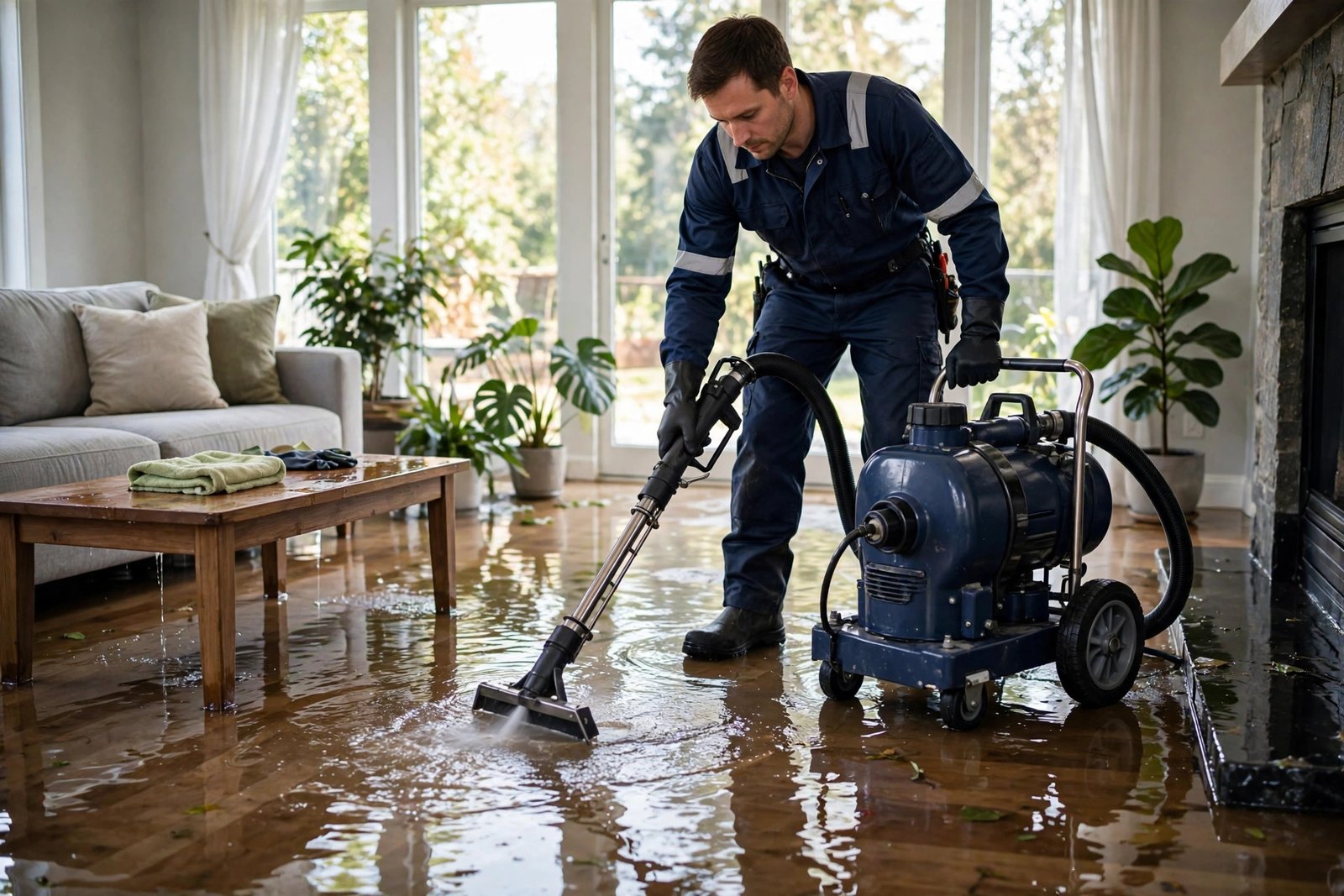
- Do not use a household vacuum or mop on standing water.
- Do not walk through standing water near outlets or electrical equipment.
- Do not wait to "see if it dries on its own" - mold can start within 24 to 48 hours.
- Do not tear out drywall, carpet, or baseboards yourself before documenting the damage.
- Do not throw away damaged items until your adjuster has seen them.
How It Works
You call.
Tell us what is happening: burst pipe, flooded basement, sewage backup, storm damage. We ask a few quick questions to understand the emergency and what kind of help you need.
We dispatch.
We send the right crew and equipment for your situation, based on the type of damage, its severity, and how urgently you need help.
Help arrives.
Our crew arrives with professional extraction and drying equipment, documents the damage for your insurance, and completes the restoration work. You only ever deal with experienced local professionals, because in a water emergency, every hour counts.
What Happens When You Call
A real person answers – 24/7, including nights, weekends, and holidays. We will ask where the water is coming from, which areas are affected, and whether it is clean water, gray water, or sewage, since that determines the crew and equipment needed. Then we dispatch immediately. If water is still flowing, we will also talk you through shutting off the source while help is on the way. The call is free, and there is no obligation.
Our Water Damage Services in Columbia
Emergency Water Extraction
Standing water removed fast, day or night.
Flood Damage Cleanup
Full cleanup after river, storm, or flash flooding.
Sewage Backup Cleanup
Safe, sanitary removal and disinfection.
Storm Damage Restoration
Roof leaks, wind-driven rain, and storm flooding.
Basement Flood Cleanup
Pump-outs and drying for flooded basements and crawl spaces.
Burst Pipe Water Damage Repair
Freeze breaks and pipe failures fixed and dried.
Ceiling and Wall Water Damage Repair
Leak damage cut out, dried, and restored.
Structural Drying and Dehumidification
Industrial drying that prevents mold.
Our Restoration Process
Emergency dispatch
Your call is answered by a real person, 24/7. We triage the emergency - water source, affected areas, water category - and dispatch a qualified local crew that can respond fast.
Assessment and moisture mapping
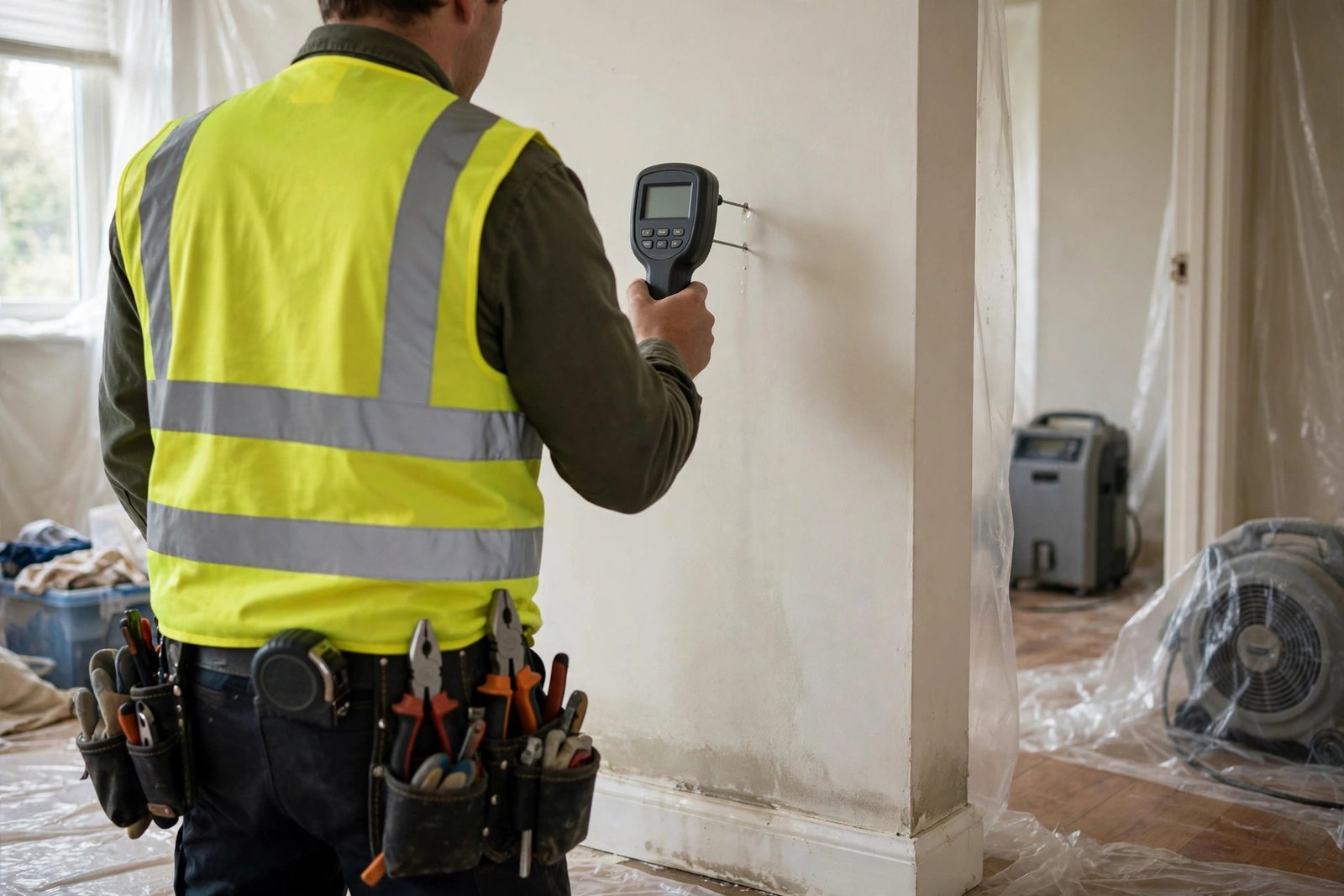
The crew inspects the damage, finds the water source, and maps hidden moisture inside walls, under flooring, and in cavities using thermal imaging and calibrated meters - before anything is cut or removed.
Water extraction
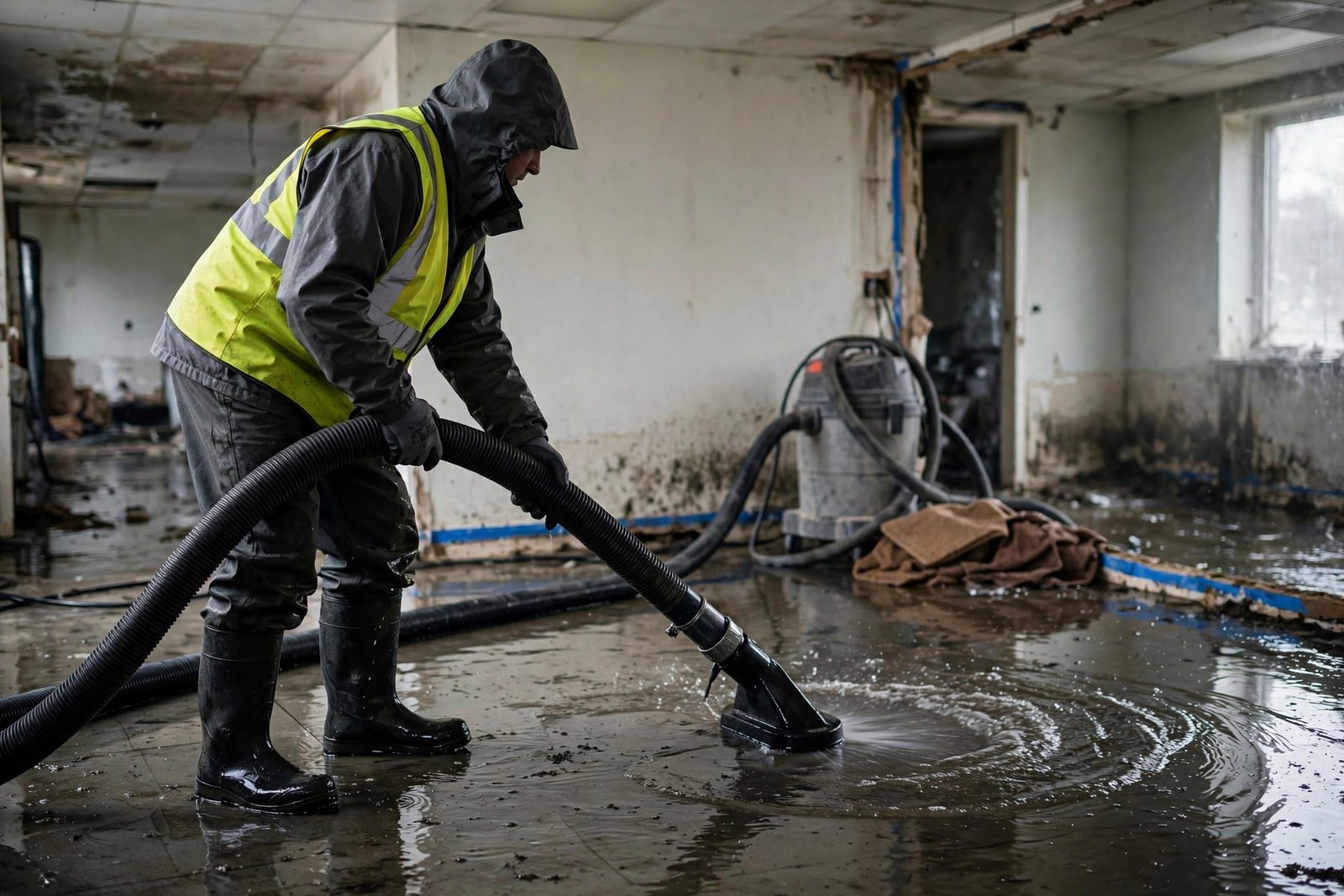
Truck-mounted extractors and commercial pumps remove standing water - hundreds of gallons per hour. Carpet pad soaked through is removed, since it cannot be salvaged.
Structural drying and dehumidification
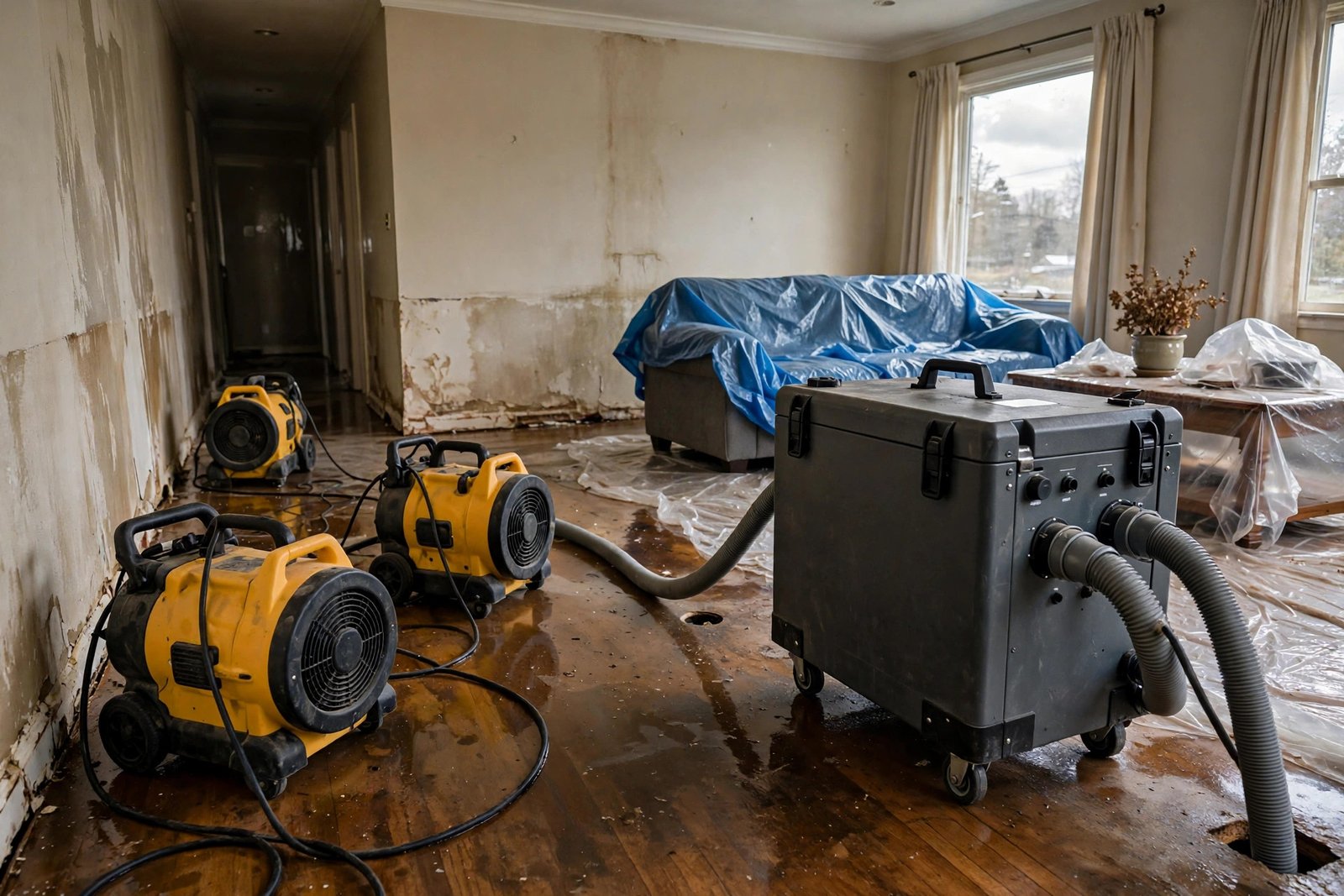
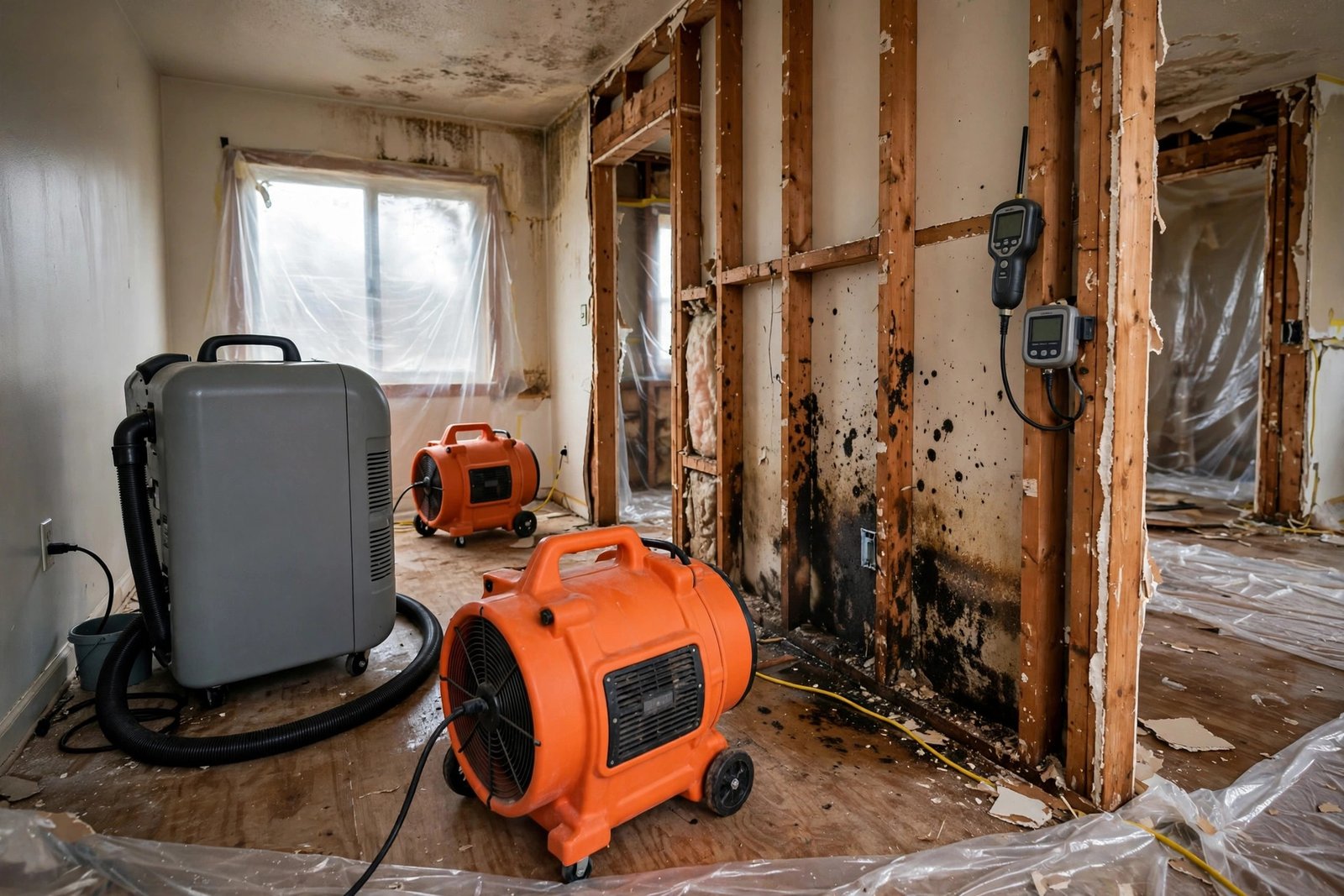
Industrial air movers and LGR dehumidifiers run around the clock with daily moisture readings. Nothing is declared dry until calibrated readings at marked points hit the dry standard.
Cleaning and sanitizing
Affected surfaces are cleaned and treated with EPA-registered antimicrobials. Contaminated porous materials are removed and disposed of per local regulations.
Repairs and restoration
Drywall, insulation, flooring, and paint are repaired or replaced to return your home to its pre-loss condition. Every step is documented for your insurance claim.
How Long Each Step Takes
| Step | Typical time |
|---|---|
| Damage assessment and moisture mapping | 1 to 2 hours |
| Water extraction | 2 to 6 hours |
| Structural drying and dehumidification | 12 to 72 hours (most Columbia homes dry in 3 to 5 days) |
| Cleaning and sanitizing | Runs alongside drying |
| Repairs and restoration | Varies by scope (typically 1 to 2 weeks for a single area) |
Common Causes of Water Damage in Columbia, SC
Burst and Frozen Pipes
Crawl-space and exterior-wall plumbing in older Columbia homes freezes during hard cold snaps, then bursts when it thaws. One burst pipe can release hundreds of gallons while you are at work.
Congaree River and Flash Flooding
The Congaree, Broad, and Saluda rivers rise fast after heavy rain, and Midlands thunderstorms dump inches in an hour. Low-lying streets and basements flood with little warning.
Appliance Failures
Water heaters, washing machines, dishwashers, and ice-maker lines fail without warning. A water heater past 10 years old is one of the most common - and most preventable - floods we see.
Sewer Backups During Heavy Rain
Aging clay and cast-iron sewer laterals, root intrusion from mature trees, and city main surges push black water back into homes, especially in older neighborhoods.
Roof Leaks from Midlands Thunderstorms
Wind-driven rain finds every weak shingle, lifted flashing, and clogged valley. Storm water enters attics and travels down inside walls long after the rain stops.
HVAC Condensation in Humid Summers
Columbia summers run hot and humid. Clogged condensate drains and sweating ductwork in attics drip steadily into ceilings - slow leaks that cause big damage before anyone notices.
What Water Damage Restoration Costs in Columbia, SC
Industry sources typically report these US-wide ranges for common scenarios. Every job differs – the actual quote comes after a free on-site assessment.
| Scenario | Typical range | What drives it |
|---|---|---|
| Minor water extraction (one room, clean water) | $500 - $1,500 | Clean water, fast response, small area |
| Full structural drying (multiple rooms) | $1,500 - $4,000 | Square footage, materials affected, drying days needed |
| Sewage backup cleanup | $2,000 - $7,000+ | Contamination level, demolition scope, disinfection required |
| Mold remediation add-on | Varies widely | Extent of growth, materials affected, containment needed |
Every job differs. The ranges above are typical US figures reported by industry sources, not local quotes. Your actual quote comes in writing after a free on-site assessment - never accept a firm quote over the phone, and get mitigation and repairs itemized separately. What drives cost everywhere: the water category (clean vs. gray vs. black), how many square feet are affected, the materials involved (carpet is cheap to handle; hardwood and plaster cost more), and how fast you called (fast response routinely saves thousands in avoided demolition).
The Equipment That Shows Up
Truck-Mounted Extractors
Remove hundreds of gallons per hour from floors, carpet, and hard surfaces - orders of magnitude faster than any wet vac.
Submersible Pumps
Clear deep standing water from basements and crawl spaces where extractors cannot reach.
Thermal Imaging Cameras
See hidden moisture inside walls and under floors without tearing anything open first.
Calibrated Moisture Meters
Take precise readings at marked points so drying is verified by numbers, not guesswork.
Industrial Air Movers
High-velocity airflow across wet surfaces that evaporates moisture far faster than household fans.
LGR Dehumidifiers
Low-grain-refrigerant units that pull gallons of moisture from the air daily, even in Columbia humidity.
HEPA Air Scrubbers
Filter airborne contaminants during demolition and drying, especially after sewage or mold jobs.
Containment Sheeting
Seals off work areas so dust, moisture, and contaminants do not spread through your home.
Will Insurance Cover Your Water Damage?
Most homeowner policies cover sudden water damage: burst pipes, appliance failures, storm intrusion. Gradual leaks from poor maintenance are typically excluded, and flooding from rising rivers usually needs separate flood coverage – so check your policy. Whatever your situation, documentation decides claims. Take photos of everything, list the affected belongings, and keep any moisture readings or drying reports. We provide the detailed documentation adjusters ask for: moisture logs, drying reports, photo records, and line-item estimates. We coordinate with your adjuster throughout the claim, and when your claim allows it, the provider can bill your insurer directly. One important right to know: your insurance company’s preferred-vendor list is optional. You choose your own contractor – no policy can force you to use theirs. Call before you start tearing things out, because proper documentation starts at the first visit. We cannot promise what your insurer will approve, but thorough documentation gives your claim its best chance. For the flood-vs-homeowners distinction, see Ready.gov/floods and FloodSmart.gov.
Clean, Gray, or Black: Know Your Water Category
Restoration professionals classify water into three categories, and the category decides the cleanup protocol. Category 1 (clean water) comes from supply lines, faucets, and rainwater – the simplest to handle. Category 2 (gray water) comes from washing machines, dishwashers, and shower drains – it carries contaminants and needs disinfection. Category 3 (black water) is sewage, rising floodwater, and anything carrying it – it requires full protective gear, controlled extraction, disposal per local regulations, and hospital-grade disinfection of every affected surface. This is why the first question we ask is always “where is the water coming from” – the answer changes the crew, the equipment, and the protocol. When in doubt, treat unknown water as Category 3 and keep people and pets away from it.
Meter-Verified Drying: Our Signature Method
Anyone can point a fan at a wet wall. We do not guess when your home is dry – we measure it. On every drying job, the crew takes calibrated moisture readings at marked, documented points across every affected material: drywall, framing, subfloor, concrete. Those readings are logged daily as industrial dehumidifiers run. Equipment stays until the readings – not the calendar, not a “feels dry” check – hit the dry standard for each material. You get the numbers with your final documentation, which means your adjuster gets proof, and you get certainty that mold is not growing silently inside your walls three weeks later.
Our Service Guarantees
Free Damage Assessment
Our team evaluates your damage at no charge, with no obligation to proceed.
A Real Person Answers 24/7
No phone trees at 2 AM. Nights, weekends, and holidays - someone picks up.
Documented Drying
Moisture readings, drying logs, and photos on every job. Proof, not promises.
No Obligation
The call is free and the assessment is free. You decide what happens next.
Drying in Progress
Areas We Serve Across the Columbia Metro
Water damage does not respect neighborhood boundaries, and neither do we. Our crews respond 24/7 throughout Columbia and the surrounding communities:
Five PointsThe VistaShandonRosewoodElmwoodEarlewoodCottontownForest AcresCayceWest Columbia
ZIP Codes We Serve
Frequently Asked Questions
How fast can you respond to water damage in Columbia?
We offer emergency response across the Columbia metro, day and night. Call (803) 555-0147 any time for a free on-site assessment.
How much does water damage restoration cost in Columbia, SC?
It depends on the water category, the square footage affected, and the materials involved. Typical US ranges reported by industry sources: minor extraction $500 – $1,500, full structural drying $1,500 – $4,000, sewage backup cleanup $2,000 – $7,000+. Every job differs – the actual quote comes after a free on-site assessment. Never accept a firm quote over the phone.
How long does structural drying take?
Most Columbia homes dry in 3 to 5 days of monitored commercial dehumidification. Dense materials like hardwood, plaster, and concrete take longer. We verify with calibrated moisture meters – equipment stays until the readings hit dry standard.
What is Meter-Verified Drying?
Our signature method: calibrated moisture readings taken at marked points on every affected material, logged daily during drying. Nothing is declared dry until the numbers – not the calendar, not a “feels dry” check – confirm it.
How long does it take for mold to grow after water damage?
Mold can begin growing on wet drywall, wood, and fabrics within 24 to 48 hours of water exposure, according to the U.S. EPA and FEMA. That is why fast extraction and complete structural drying matter more than anything else.
Will my homeowner's insurance cover water damage restoration?
Usually yes for sudden events: burst pipes, appliance overflows, storm-driven rain through a damaged roof. Gradual leaks from poor maintenance are typically excluded, and river flooding usually requires separate flood insurance. We document everything your adjuster needs.
Can you save my hardwood floors after flooding?
Often, yes, if drying starts quickly. We use targeted drying mats and dehumidification designed for hardwood. Floors left wet for days usually cup, buckle, and need replacement. Speed is everything.
Do you work with my insurance company directly?
We provide detailed moisture reports, drying logs, and photo documentation, and we coordinate with your adjuster throughout the claim. When your claim allows it, we can bill your insurer directly. You approve everything before work proceeds.
Do I have to use the contractor my insurance company recommends?
No. Your insurer’s preferred-vendor list is optional – you have the right to choose your own contractor. We document to the same industry standards adjusters expect, whichever contractor you pick.
Which areas do you serve?
All of Columbia, SC, including Five Points, The Vista, Shandon, Rosewood, Elmwood, Forest Acres, Cayce, West Columbia, Irmo, and Lexington – ZIP codes 29201 through 29229 and surrounding areas.
How do I choose a reputable water damage restoration company in Columbia, SC?
Look for four things: 24/7 emergency response with real local dispatch, moisture-meter verification (not just fans and a handshake), full documentation for your insurance claim, and clear written scopes before work starts. Be wary of anyone quoting a firm price over the phone without seeing the damage – reputable companies assess first, then quote.
Request a Callback
Prefer to talk later? Send your details and we will call you back shortly. A real person answers 24/7, including nights, weekends, and holidays. The call is free, and there is no obligation.
Water damage gets worse every hour you wait.
Water damage gets worse every hour you wait. Call (803) 555-0147 now for 24/7 emergency water damage restoration in Columbia, SC. Fast extraction. Complete drying. One call and it is handled.