Water Damage Restoration in Earlewood, Columbia, SC
Earlewood is a historic North Columbia neighborhood – early-20th-century homes, big trees, and deep community roots near the downtown core. Like its historic neighbors, Earlewood’s housing stock brings classic water risks: aging plumbing, old sewer laterals, roofs at or past replacement age, and low-lying spots that collect storm water. Columbia Flood Fix Pros connects Earlewood homeowners with independent local water damage restoration providers. (803) 555-0147 Serving ZIP code 29204
Common Water Damage Problems in Earlewood
Supply line failures in aging plumbing, sewer backups, roof leaks, water heater failures, and storm water intrusion in low-lying areas. Many Earlewood homes have had partial updates over the decades – new plumbing tied into old, which creates failure points at the junctions. It is a common pattern: the new section holds, the old section lets go.
Water Damage Services in Earlewood
Emergency water extraction, flood damage cleanup, sewage backup cleanup, storm damage restoration, basement and crawl space flood cleanup, burst pipe repair, ceiling and wall repair, and structural drying. Providers start every job with moisture mapping to find all of it – including water hiding behind walls from old, slow leaks.
Why Earlewood Homeowners Call Us
You get straight answers: what is wet, what can be saved, what has to go, and what it will take to prevent a repeat. The provider’s documentation supports your insurance claim, drying is verified with meters, not fans and hope, and repairs aim for invisible: matched textures, matched paint, no trace of the damage.
Whatever the cause – from emergency water extraction and structural drying and dehumidification to full flood recovery – you are covered by trusted local restoration services. One call connects you with a local provider, and the provider documents every job for your insurance.
Earlewood's Mixed-Era Plumbing and Water Risk
Earlewood’s early-20th-century homes have seen decades of partial updates – new plumbing tied into old, which creates failure points at the junctions where materials expand and contract differently. Aging supply lines, old sewer laterals, and roofs at or past replacement age make up the classic risk profile, and low-lying spots in the neighborhood collect storm water. Because many Earlewood homes have had piecemeal renovations, slow hidden leaks behind walls are common – the kind that only show up as a musty smell or a soft spot in drywall. Full moisture mapping on every job is how providers find all of it.
The most common causes are supply line failures at old-to-new plumbing junctions, sewer backups from aging laterals, roof leaks, water heater failures, and storm water intrusion in low-lying areas. Burst pipes in uninsulated crawl spaces during freezes round out the winter risk.
Rocky Branch, Mature Trees, and Storm Risk in Earlewood
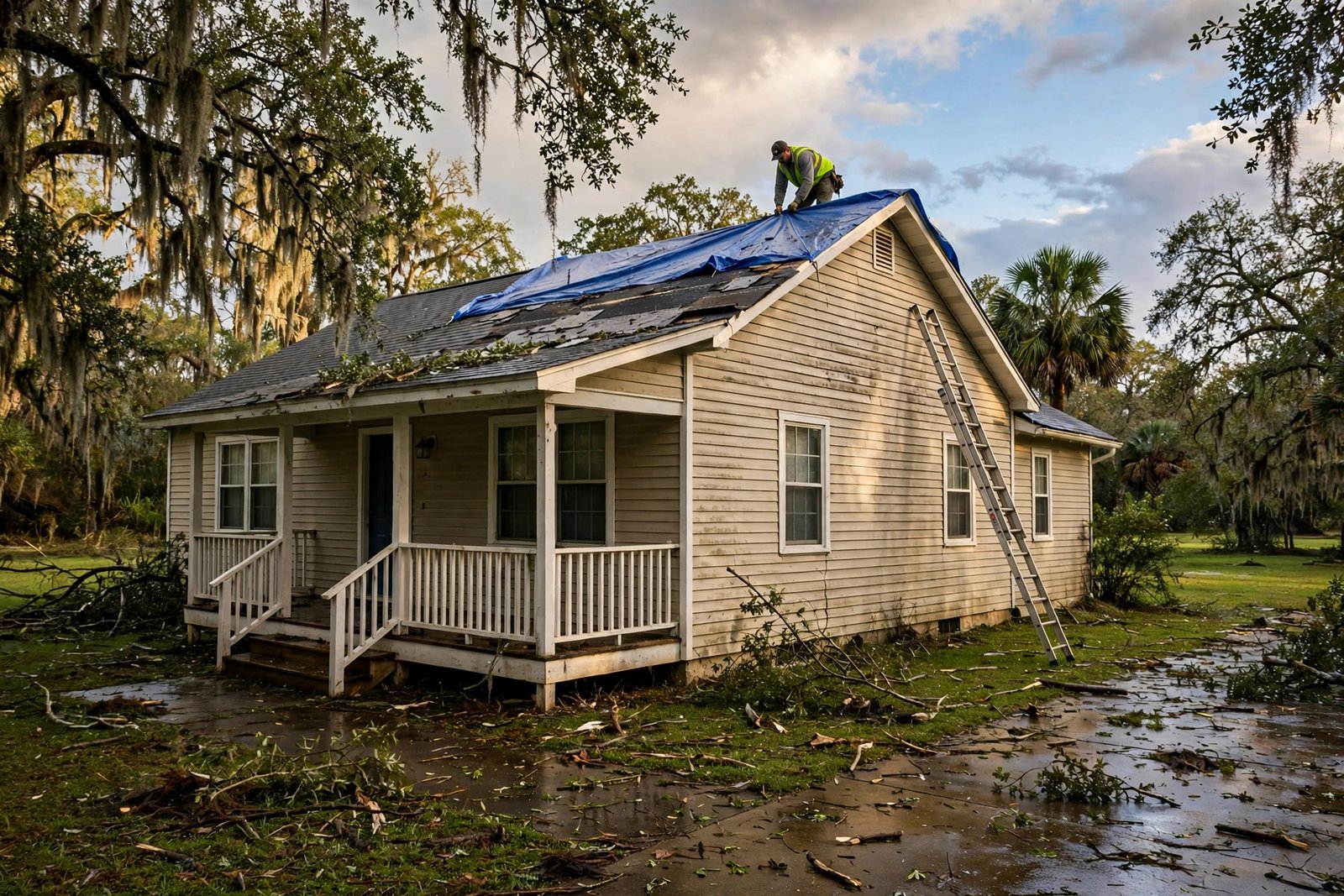
Earlewood’s bungalows sit in one of Columbia’s greenest settings, and two neighborhood features shape its storm risk. Rocky Branch winds through this side of the city and can rise quickly in heavy rain, pushing water into low yards and toward foundations and crawl spaces. The neighborhood’s mature tree canopy is the second factor. Old oaks drop limbs and debris on roofs at or past replacement age, and clogged gutters send water over the edge and down walls. Hurricanes Matthew in 2016 and Florence in 2018 showed the pattern: days of wind and rain, saturated ground, and creeks running high across Columbia. After storms like those, Earlewood homeowners should check the roof line, clear gutters, and look under the house.
How Does Rocky Branch Affect Earlewood Homes During Heavy Rain?
When Rocky Branch runs high, low spots near the creek collect water, and saturated ground pushes moisture toward foundations and crawl spaces. After heavy rain, check under your home for standing water and damp soil against the foundation. A local provider can extract water and dry the crawl space before mold takes hold.
Why Do Earlewood's Mature Trees Raise the Roof Leak Risk?
Old trees drop limbs and heavy leaf litter on aging roofs, and clogged gutters overflow down exterior walls. Roots can also work into older sewer laterals. Keeping gutters clear and dead limbs trimmed lowers the risk. If a leak has already started, a local provider can dry the structure and document the damage.
Sources
Sources
- IICRC - The restoration industry's standards body (S500 water damage standard).
- U.S. EPA Mold - Mold growth timelines and cleanup guidance.
- Ready.gov Floods - Flood preparedness and insurance guidance.
Frequently Asked Questions
My home has mixed old and new plumbing. Is that a risk?
Yes, junctions between old and new plumbing are common failure points in Earlewood homes, because the materials expand and contract differently over time. That mixed plumbing deserves extra attention, especially after partial updates. If your home has partial updates, make sure everyone in the household knows where your main shutoff is, so you can stop water fast if a joint fails.
How quickly should I call after finding water?
Right away. Mold can start within 24 to 48 hours, and every hour of standing water increases the demolition scope, so waiting only makes the job bigger. Call (803) 555-0147, and the provider you are connected with will talk you through the first steps. The sooner extraction starts, the more of your home can be saved.
Do providers guarantee their drying work?
Providers verify drying with calibrated moisture meters against documented dry standards, and they share the readings so you can see the proof. A provider does not sign off until the numbers say dry, which means the structure is ready for repairs. That careful check protects your home from hidden moisture and mold problems later on.
What happens if water damage is left untreated?
Water keeps spreading into dry materials, wood framing and subfloors begin to rot, and mold colonies establish in wall cavities. In Earlewood’s bungalows, untreated damage also weakens plaster and invites pests into damp wood. A small drying job can become major demolition and rebuild work. Call (803) 555-0147 sooner rather than later.
Can I dry out water damage myself or do I need a professional?
A small spill on a hard surface is fine to handle yourself. The trouble is the water you cannot see: moisture inside walls, under floors, and in crawl spaces rarely dries on its own. Providers use moisture meters to find it and verify dryness. For anything beyond a minor spill, call (803) 555-0147 to connect with a local provider.
Does homeowners insurance cover water damage in Earlewood?
Most policies cover sudden and accidental damage, like a burst supply line or failed water heater. Rising creek or storm water counts as flood damage and needs a separate flood policy, while sewer backups usually require an added endorsement. Slow leaks are often excluded. A provider documents the source for your claim. Call (803) 555-0147.
Water damage in Earlewood? Get it handled right the first time.
Water damage in Earlewood? Get it handled right the first time. Call (803) 555-0147 now – serving Earlewood and Columbia, SC.