Sewage Backup Cleanup in Columbia, SC
A sewage backup is the one water emergency you should never handle yourself. Black water carries bacteria, viruses, and parasites that make proper protective equipment and disinfection non-negotiable. When you’re searching for sewer backup cleaning services near you, one call to Columbia Flood Fix Pros connects you with an independent local provider for safe, professional sewage backup cleanup across Columbia, SC. (803) 555-0147
Why Sewage Is Different
Restoration professionals classify water in three categories: clean (supply lines), gray (appliances, showers), and black (sewage, floodwater with contaminants). Sewage is what the industry calls category 3 water damage – the most contaminated classification there is, carrying bacteria, viruses, and parasites that make it unsafe for anyone without training and protective equipment. Black water requires full PPE, controlled extraction, disposal per local regulations, and hospital-grade disinfection of every affected surface. This is not a mop-and-bucket job.
The Sewage Cleanup Process
The affected area is contained to stop cross-contamination, sewage is extracted with dedicated equipment, all porous materials that contacted it are removed (carpet, pad, drywall, insulation – these cannot be salvaged after black-water exposure), hard surfaces are cleaned and disinfected with EPA-registered antimicrobials, the structure is dried completely, and dryness is verified with moisture readings before any rebuild begins.
Common Causes in Columbia
Aging clay and cast-iron sewer laterals in older neighborhoods like Shandon and Elmwood, root intrusion from mature trees, city main blockages that push back into homes, and heavy rain overwhelming combined systems. If backups recur, a sewer camera inspection is worth getting to find the underlying fault.
Health Risks of DIY Sewage Cleanup
Exposure to black water can cause gastrointestinal illness, skin infections, and respiratory issues. The IICRC S500 standard – the restoration industry’s rulebook – requires specific containment and disinfection procedures for Category 3 water losses. Professional cleanup protects your health and creates the documentation your insurer needs.
The Containment Protocol
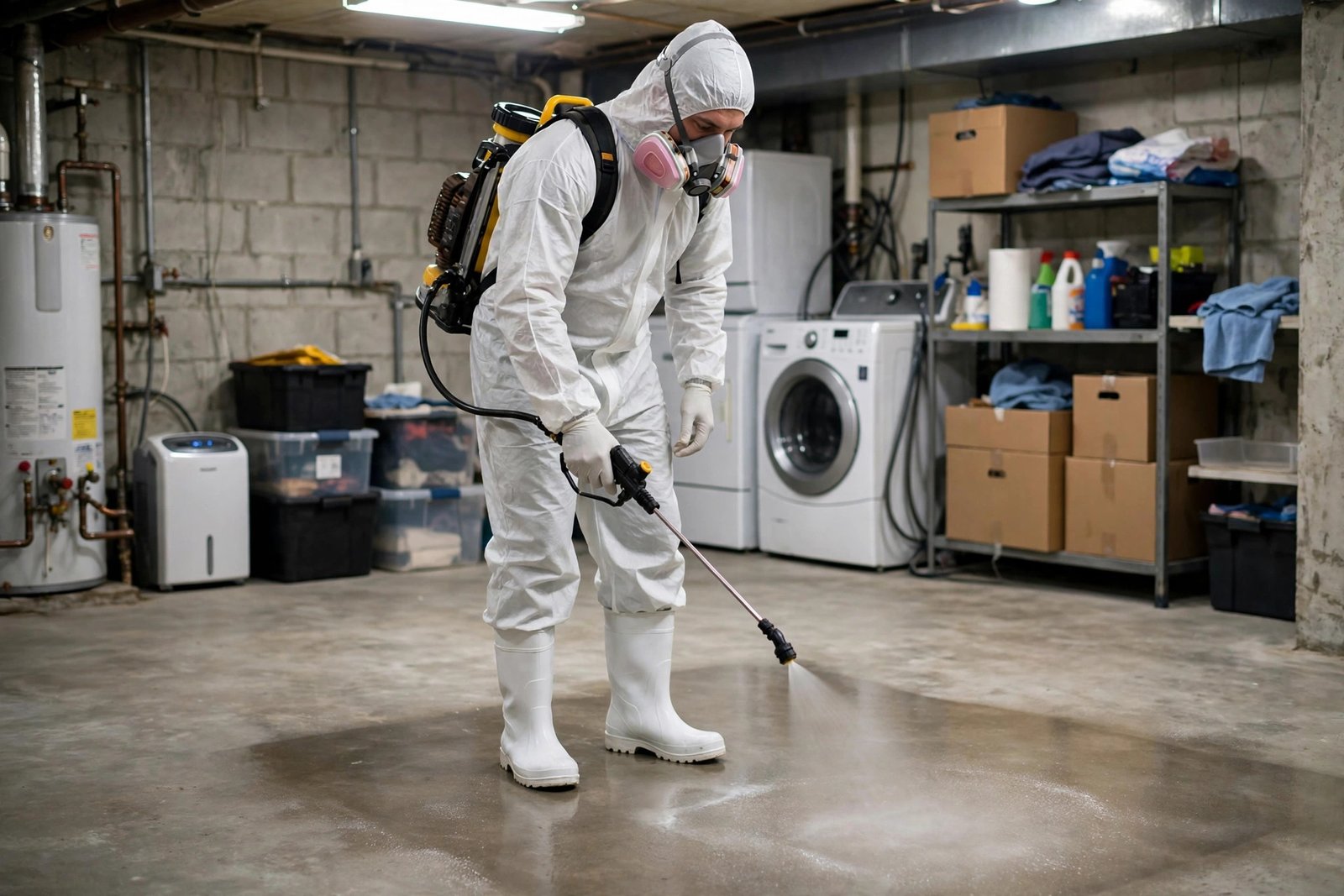
The first step at a sewage backup is stopping it from spreading. The provider seals off the affected area with physical barriers, shuts down HVAC circulation to that zone so contaminants don’t travel through your ductwork, and establishes a clean path in and out. All work happens in full protective gear – suits, gloves, boots, respirators. Contaminated materials are bagged and removed through the contained path, never carried through clean rooms. This protocol is what separates professional black-water cleanup from a mop job that spreads bacteria through the whole house.
After Cleanup: Verification Before Rebuild
Nobody rebuilds on hope. After extraction, removal, disinfection, and drying, the provider verifies: moisture readings at dry standard on every surface, visual confirmation that all contaminated porous material is gone, and a final antimicrobial treatment on framing and subfloors. Only then is the area signed off for repairs. You’ll receive documentation of every step – what was removed, what was treated, and the final readings. That record protects your health and your insurance claim alike.
Sewage emergencies usually start with emergency water extraction to remove contaminated water fast, followed by the full disinfection protocol above. For any category of water emergency, professional water damage restoration in Columbia begins with a single call.
Sewage Backup Cleanup Timeline
| Step | Typical time |
|---|---|
| Emergency containment of the affected area | 1-2 hrs |
| Sewage extraction with dedicated equipment | 2-6 hrs |
| Removal of contaminated porous materials | 4-8 hrs |
| Disinfection and antimicrobial treatment | 4-8 hrs |
| Structural drying and final verification | 3-5 days |
What Affects the Cost of Sewage Backup Cleanup
Black-water jobs carry higher costs than clean-water jobs: full containment setup, protective equipment, disposal of contaminated materials per local regulations, demolition of everything porous the sewage touched, and hospital-grade disinfection. How much area is affected and how far the contamination spread drive the total. The provider who takes your call confirms the scope, availability and price with you directly before any work begins. Never accept a firm quote over the phone.
The Equipment Behind Safe Sewage Cleanup
Providers use containment sheeting to seal the work area, dedicated extraction equipment reserved for black water, HEPA air scrubbers to protect indoor air quality, and industrial air movers for the drying phase – plus full PPE on every crew member.
Why Sewage Is Category 3 (Black Water)
Sewage is Category 3 water by definition: it carries bacteria, viruses, and parasites that make it unsafe for occupants and require professional handling. That classification is why porous materials that contact sewage cannot be salvaged, why disinfection must use EPA-registered products, and why the IICRC S500 standard prescribes specific containment procedures for these jobs.
Sources
Sources
- IICRC - The restoration industry's standards body (S500 water damage standard).
- U.S. EPA Mold - Mold growth timelines and cleanup guidance.
Frequently Asked Questions
Do you offer emergency sewer backup help near me in Columbia, SC?
Yes, if you are searching for emergency sewer backup help near me in Columbia, SC, call (803) 555-0147 right away. Sewage backups cannot wait, because black water spreads contamination fast and the health risks grow with every hour. One call connects you with an independent local provider who can contain the area and start the safe cleanup process.
What does sewer backup restoration involve?
Sewer backup restoration means removing the contaminated water, discarding porous materials that touched sewage, and deep-cleaning hard surfaces. The provider then disinfects with EPA-registered products, dries the structure with commercial equipment, and verifies moisture levels before any rebuild. That careful sequence protects your health and makes sure no hidden contamination is left behind in your home.
Where can I find sewer backup cleaning services near me in Columbia, SC?
Right here. Call (803) 555-0147 and one call connects you with an independent local provider for sewer backup cleaning services across Columbia, SC. The provider contains the area, removes the contamination, and disinfects your home safely. Because black water is a health risk from the first hour, getting connected quickly matters more than anything else.
How do I choose between sewer backup companies?
Not all sewer backup companies handle cleanup the same way, so ask the right questions before you hire anyone. Look for proper protective equipment and containment procedures, EPA-registered disinfection, moisture verification before rebuild, and full documentation for your insurance claim. Be wary of anyone who quotes a firm price over the phone without seeing the contamination, because every black-water job is different.
Is it safe to stay in the house after a sewage backup?
Until the affected area is professionally cleaned and disinfected, keep people and pets away from it. Airborne contaminants are a real concern with black water, and sewage carries bacteria, viruses, and parasites that can make you sick. A professional provider contains the area first, then cleans and disinfects every surface, so your home is safe to use again only after the job is verified complete.
Can anything be saved after sewage exposure?
Hard, non-porous surfaces and items can be disinfected and saved, which is good news after a messy backup. Porous materials, including carpet, pad, drywall, upholstered furniture, and mattresses, that contacted sewage must be removed and discarded, because they cannot be cleaned safely. The provider walks you through what can stay and what has to go, so you know exactly where things stand.
Does insurance cover sewage backups?
Many homeowner policies exclude sewer backups unless you have added a water or sewer backup endorsement, which is usually an inexpensive add-on. That small endorsement can make a big difference when a backup happens. Check your policy carefully, and talk to your insurer about adding it. Either way, the provider documents the loss thoroughly, so you have a complete record for your claim.
How do I prevent another backup?
A backwater prevention valve on your sewer lateral stops city-main surges from entering your home, which is the best protection against a repeat backup. For older lines, periodic camera inspections catch root intrusion before it becomes a backup. A provider can advise you on both options after cleanup, so you leave with a plan that keeps sewage out of your home for good.
How much does sewage backup cleanup cost?
Black-water jobs cost more than clean-water jobs because of containment, protective equipment, and safe disposal. The total depends on the affected area, how much material must be removed, and the disinfection required. No firm price is possible without seeing the contamination. The provider who takes your call confirms the scope and price with you directly before any work begins.
How long before my home is safe to use again?
Extraction and removal happen first, so the worst of it comes out on day one. Disinfection and structural drying typically run 3 to 5 days, with verification before rebuild. You should stay out of the affected area until the job is verified complete, because black water needs that full process before your home is safe to use again.
Should I call a plumber or a restoration company first?
If sewage is actively backing up, stop using water and call a plumber to clear the line, but also call (803) 555-0147 the same hour. Cleanup, disinfection, and drying are restoration work, and the 24-to-48-hour mold window applies to sewage jobs too. One call connects you with a local provider who contains the area, removes the contamination, and starts drying.
How do you disinfect after sewage exposure?
After extraction and removal of contaminated materials, the provider cleans and treats all remaining hard surfaces with EPA-registered antimicrobial products. The structure is then dried to verified standards, and a final treatment is applied before any rebuild begins. That last step matters, because it makes sure the area is truly disinfected and dry before new materials go back in.
What should I look for in sewer backup cleanup companies?
Three things: proper protective equipment and containment on every job, EPA-registered disinfection (not just deodorizing), and moisture verification proving the structure is actually dry before rebuild. Ask how they dispose of contaminated materials and whether they document everything for your insurance claim – the answers tell you whether you’re talking to professionals or a carpet cleaner with a van.
I'm searching "sewer backup cleaning services near me" - do you serve my neighborhood?
Yes, local providers cover Columbia and the surrounding Midlands communities, so help is close by when a sewer backup hits. Black-water emergencies spread contamination fast, so call (803) 555-0147 as soon as you spot one. One call connects you with an independent local provider who can confirm your area, answer your questions, and explain the next steps.
Don't touch sewage water - call professionals.
Don’t touch sewage water – call professionals. (803) 555-0147 – sewage backup cleanup in Columbia, SC.