Water Damage Restoration in Elmwood, Columbia, SC
Elmwood sits just north of downtown Columbia – a historic neighborhood of early-1900s homes, many beautifully restored, with mature trees and a close-in urban feel. Century-old houses mean century-old infrastructure: original plumbing long past its prime, aging sewer laterals, old roofs, and basements or crawl spaces that predate modern waterproofing. Columbia Flood Fix Pros connects Elmwood homeowners with independent local providers who respect historic homes. (803) 555-0147 Serving ZIP code 29201
Common Water Damage Problems in Elmwood
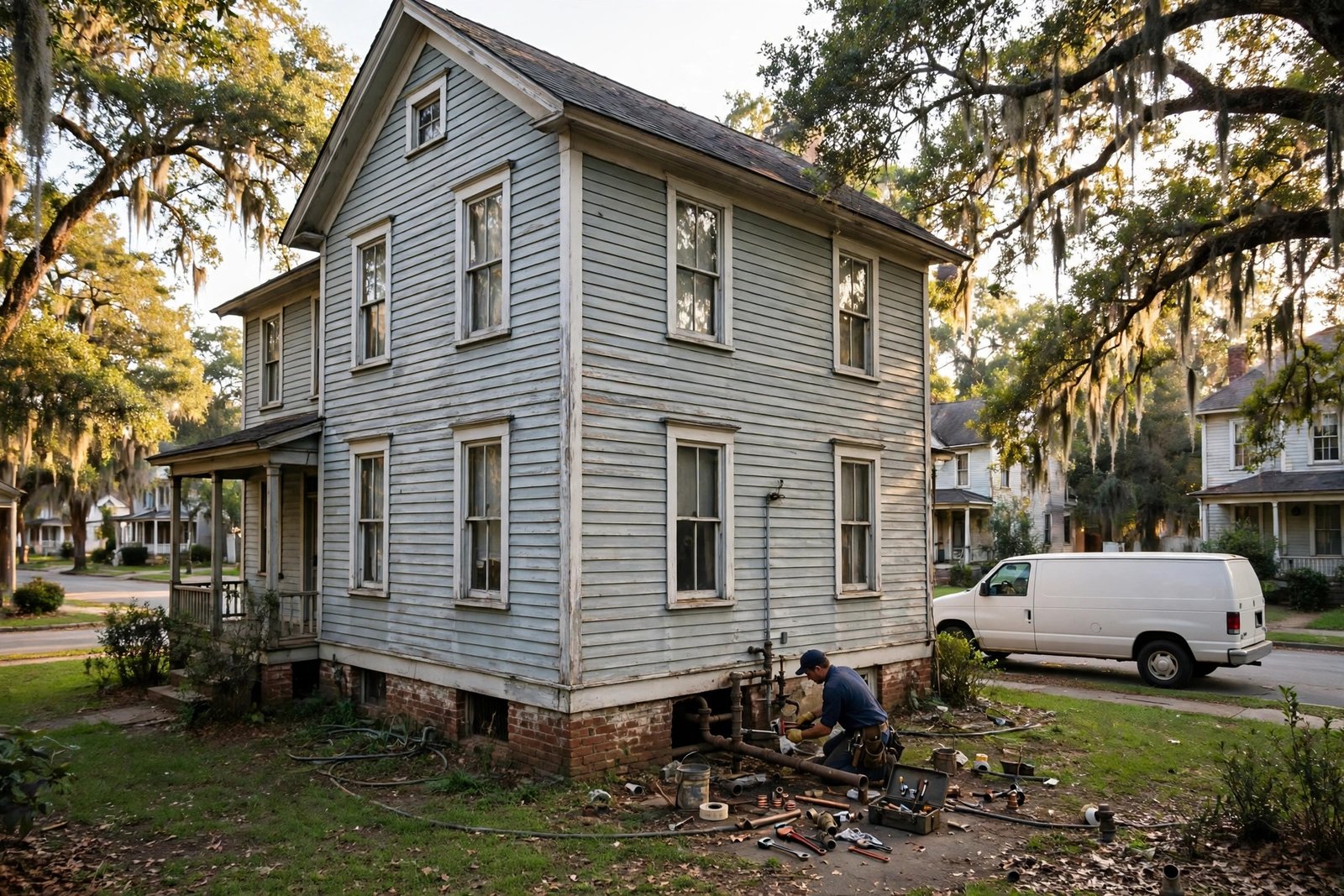
Burst pipes in uninsulated crawl spaces and exterior walls during freezes, sewer backups from deteriorated laterals, roof leaks on complex historic rooflines, water heater and boiler failures, and groundwater seepage into old basements. Restoration work itself can even reveal old damage – evidence of long-ago leaks hidden behind walls turns up often.
Water Damage Services in Elmwood
Emergency water extraction, flood damage cleanup, sewage backup cleanup, storm damage restoration, basement flood cleanup, burst pipe repair, ceiling and wall repair, and structural drying. Local providers dry historic materials – plaster, old-growth lumber, original floors – and match historic textures and finishes during repairs.
Why Elmwood Homeowners Call Us
Century homes need restoration thinking, not just demolition. Local providers moisture-map before cutting, save historic fabric where possible, and document everything for insurance – including the pre-existing conditions adjusters ask about in older homes. Providers here are used to tight crawl spaces, steep historic lots, and the surprises old houses keep.
Whatever the cause – from ceiling and wall water damage repair and burst pipe repair to full flood recovery – you are covered by water damage restoration services in Columbia, SC. One call connects you with a local provider, and the provider documents every job for your insurance.
Elmwood's Century Homes and Water Risk
Elmwood’s early-1900s homes, many beautifully restored, run on infrastructure that predates modern waterproofing: original plumbing long past its prime, deteriorated sewer laterals, and basements or crawl spaces built before anyone thought about drainage. Complex historic rooflines leak in ways modern roofs don’t, and burst pipes in uninsulated crawl spaces and exterior walls can hit across the neighborhood in a single hard freeze. Restoration here demands preservation thinking – plaster, old-growth lumber, and original floors dry differently than modern materials and should be saved whenever physically possible. Providers moisture-map before cutting anything.
The most common causes are frozen-pipe bursts in vented crawl spaces and exterior walls, sewer backups from deteriorated laterals, roof leaks on complex historic rooflines, water heater and boiler failures, and groundwater seepage into old basements. Renovation work itself often reveals long-hidden old damage behind walls.
Elmwood, the Columbia Canal, and the 2015 Flood
Elmwood’s setting explains much of its water risk. The neighborhood sits between downtown and the Broad River, beside the Columbia Canal, the waterway that carries the city’s drinking water supply. In October 2015, during the thousand-year rain event that dropped 15 to 20 or more inches on Columbia in three days, the canal embankment was breached, and rivers ran at historic levels. Elmwood’s low ground near the river felt it through rising groundwater, seepage into old basements, and saturated soil pressing against foundations that predate modern drainage. The same pattern returns in smaller storms: when the Broad River runs high, groundwater in Elmwood rises with it, and crawl spaces and basements in century-old homes take on moisture even without a pipe failure. With aging plumbing near downtown as well, Elmwood homeowners should treat unexplained dampness as a real warning sign.
Why Are Elmwood's Old Sewer Laterals a Water Risk?
Many Elmwood laterals are clay or cast iron lines that have cracked, shifted, or filled with roots over a century of use. That is why sewer backups are a recurring problem in the neighborhood. A local provider can clear the backup, clean and sanitize the affected area, and document the damage for your records.
What Happens in Elmwood When the Broad River Runs High?
Groundwater rises with the river, and Elmwood’s old basements and crawl spaces often take on seepage even when no pipe has failed. After a major storm, check low areas for dampness, musty smells, or standing water. A local provider can extract water, dry the structure, and check for hidden moisture behind walls.
Sources
Sources
- IICRC - The restoration industry's standards body (S500 water damage standard).
- U.S. EPA Mold - Mold growth timelines and cleanup guidance.
Frequently Asked Questions
Will restoration damage my home's historic features?
A good provider takes a preservation-first approach, drying and saving historic plaster, woodwork, and flooring in Elmwood whenever physically possible. Only what is unsalvageable comes out, and that happens with your approval first, so nothing historic is lost without your say. The provider talks through each feature with you and explains what can be saved. Call (803) 555-0147.
Are frozen pipes a big risk in Elmwood?
Yes, many Elmwood homes have plumbing in vented crawl spaces and exterior walls with minimal insulation, which leaves pipes exposed to cold air. A hard freeze can burst pipes across the neighborhood in a single night, so winter preparation matters here. Know where your main shutoff is, and call for help fast if you find water.
How do you handle insurance for older homes?
A local provider documents pre-existing conditions, the new damage, and every step of mitigation, so your Elmwood claim has a thorough record from start to finish. That is the kind of detailed file adjusters need for historic properties, where old and new damage can look alike. Photos, readings, and notes stay organized, so nothing important gets missed.
How do I know if water has gotten inside my walls?
Look for bubbling or peeling paint, stains that grow, warped baseboards, and a musty smell that does not clear. In Elmwood’s plaster walls, moisture often hides with few surface signs, so providers use moisture meters and thermal checks to confirm what is wet. Catching hidden moisture early protects historic materials from rot and mold. Call (803) 555-0147.
How fast does mold grow after water damage?
EPA guidance says mold can begin growing within 24 to 48 hours on wet materials, and Elmwood’s plaster, old-growth lumber, and closed-up wall cavities give it plenty to feed on. Prompt extraction and structural drying lower the risk, and providers verify dryness with meters before walls are closed again. If you suspect mold after a leak, call (803) 555-0147.
Can I stay in my home while it is being dried out?
Often, yes, especially when the damage is limited to one area. Drying equipment is loud, and some rooms may be sealed off while work runs. Sewage or heavy mold changes the picture, and the provider will tell you honestly if staying is not sensible. Call (803) 555-0147 to talk it through.
Water damage in your Elmwood home? Get historic-home expertise.
Water damage in your Elmwood home? Get historic-home expertise. Call (803) 555-0147 now – serving Elmwood and Columbia, SC.