How Much Does Water Damage Restoration Cost in Columbia, SC?
Nobody plans for water damage, and nobody likes surprise bills. One thing to know up front: every job is different, so the actual quote always comes after a free on-site assessment. What this guide does give you is honest context: typical US-wide ranges reported by industry sources, what drives the price up or down, what insurance usually covers, and how to keep costs under control. (803) 555-0147
Key Takeaways
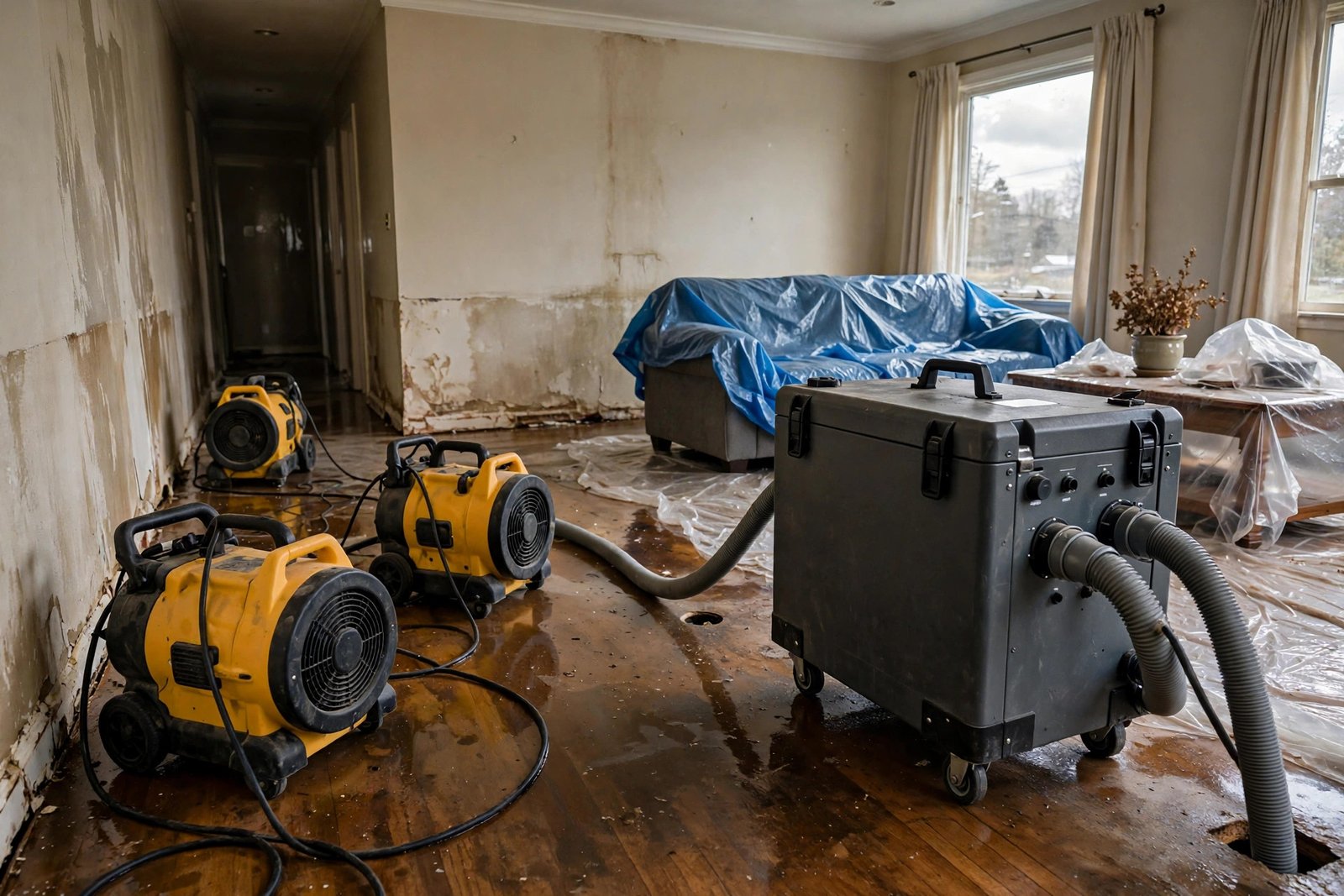
- Typical US ranges reported by industry sources: minor extraction $500 - $1,500; full structural drying $1,500 - $4,000; sewage backup cleanup $2,000 - $7,000+.
- The biggest cost drivers are water category (clean vs. gray vs. black), square footage affected, and materials involved.
- Fast response routinely saves thousands - every day of delay adds demolition and mold remediation scope.
- Sudden water damage is usually covered by homeowner insurance; gradual leaks and river flooding usually are not.
- Every job differs - the actual quote comes after a free on-site assessment. Never accept a firm quote over the phone.
Typical Water Damage Restoration Costs in Columbia, SC
Industry sources typically report these US-wide ranges for common scenarios. They are not local quotes. Your actual quote comes in writing from the independent local professional after a free on-site assessment.
| Scenario | Typical range | What drives it |
|---|---|---|
| Minor water extraction (one room, clean water) | $500 - $1,500 | Small area, fast response, no demolition |
| Full structural drying (multiple rooms) | $1,500 - $4,000 | Square footage, drying days, materials affected |
| Sewage backup cleanup | $2,000 - $7,000+ | Contamination level, demolition scope, disinfection required |
| Storm and flood damage cleanup | $2,000 - $8,000+ | Water depth, contamination, how much material must be removed |
| Mold remediation add-on | Varies widely | Extent of growth, materials affected, containment needed |
Every job differs - the actual quote comes after a free on-site assessment. The ranges above are typical US figures reported by industry sources, not Columbia quotes, and they move with job-specific factors. Never accept a firm quote over the phone without an on-site assessment, and get mitigation and repairs itemized separately in writing.
6 Factors That Drive Your Cost
1. Water category. Clean water (Category 1, from supply lines) is the cheapest to handle. Gray water (Category 2, appliances and drains) needs disinfection. Black water (Category 3, sewage and floodwater) requires full protective protocols, demolition of porous materials, and hospital-grade disinfection – the most expensive jobs start here. 2. Square footage affected. More wet area means more extraction time, more equipment, more drying days, and more material to potentially replace. A single bathroom is a different job than a flooded first floor. 3. Materials involved. Wet carpet pad gets thrown out cheaply. Hardwood floors need specialized drying mats. Plaster walls can often be dried in place; drywall usually gets cut out. Tile over concrete is the easiest recovery; finished basements are the hardest. 4. How fast you called. Water wicks upward into drywall at roughly an inch per hour early on. Fast professional extraction routinely saves thousands in avoided demolition and mold remediation. The cheapest restoration is the one that starts today. 5. Demolition scope. Removing soaked drywall, insulation, carpet pad, and flooring adds labor and disposal cost – but skipping necessary demolition guarantees a bigger mold problem later. 6. Repairs after drying. Mitigation (extraction and drying) is one cost; putting your home back together (drywall, paint, flooring) is another. Get both scopes in writing before work starts.
What Insurance Usually Covers
Standard homeowner policies typically cover sudden and accidental water damage: burst pipes, appliance failures, water heater ruptures, and rain entering through storm-damaged roofs. What is usually NOT covered: gradual leaks from poor maintenance, seepage through foundations, and rising floodwater from rivers – that needs separate flood insurance through the NFIP or a private carrier. Sewer backups need a water/sewer backup endorsement, usually an inexpensive add-on. Whatever your situation, documentation decides claims: photos, moisture logs, drying reports, and line-item estimates. We provide all of it. Check the flood-vs-homeowners distinction at Ready.gov/floods and FloodSmart.gov.
How to Keep Your Costs Down
Call immediately – speed is the single biggest money-saver. Shut off the water source and document everything with photos before cleanup starts. Do not tear out materials yourself before the adjuster sees them. Get the drying verified with moisture readings so you are not paying for a mold problem later. Ask whether your policy has a sewer backup endorsement before you need it. And get every quote in writing with mitigation and repairs itemized separately, so you can compare apples to apples.
Sources
Sources
- U.S. EPA - Mold - Mold growth timelines and cleanup guidance.
- Ready.gov - Floods - Flood insurance and preparedness guidance.
- FloodSmart.gov - The National Flood Insurance Program's official site.
- IICRC - The restoration industry's standards body (S500 water damage standard).
Frequently Asked Questions
Because no two jobs are alike – and because some quotes skip necessary steps. A quote that omits moisture mapping, daily drying verification, or proper demolition will look cheaper and cost more later. Compare itemized scopes, not bottom lines.
Yes. A qualified local professional evaluates your damage, explains what is needed, and gives you a written scope – at no charge and with no obligation to proceed.
If the damage is sudden and accidental (burst pipe, appliance failure, storm intrusion), usually yes, minus your deductible. Gradual damage and flooding typically are not covered. We document everything your adjuster needs to approve the claim.
Household fans and dehumidifiers cannot match commercial equipment, and without moisture meters you cannot verify anything is actually dry. In Columbia’s humidity, DIY drying takes weeks – past the EPA’s 24-to-48-hour mold window. Most DIY attempts end up costing more.
It varies widely with the extent of growth and the materials affected. This is exactly why fast extraction and verified drying matter: preventing mold is far cheaper than remediating it.
Ask us about payment options when you call. For insurance claims, the provider can often bill your insurer directly when the claim allows it.
Get the scope itemized: extraction, demolition, drying days, sanitizing, and repairs listed separately. Check that moisture verification is included. Be wary of any company that quotes a firm price over the phone without seeing the damage.
Get an honest assessment - free.
Get an honest assessment – free. Call (803) 555-0147 now for a free on-site damage assessment anywhere in Columbia, SC. No blind quotes, no obligation – just a real scope and real numbers.