What to Do in the First 24 Hours After Water Damage in Columbia, SC
Water is in your home and the clock is running. This guide walks you through exactly what to do – and what not to do – in the first 24 hours after water damage in Columbia, SC. Follow these steps while you wait for professional help, and you will protect your health, your home, and your insurance claim. (803) 555-0147
Key Takeaways
- Call for professional help immediately - mold can start within 24 to 48 hours, according to the U.S. EPA.
- Shut off the water source and electricity to flooded areas if you can do it safely.
- Document everything with photos and video before anything is moved or removed.
- Do not use household vacuums on standing water, and do not tear out materials before your adjuster sees them.
- Keep people and pets away from sewage or floodwater - treat unknown water as contaminated.
Do This First (While Help Is on the Way)
Do This Now
- Call (803) 555-0147 right now - crews can usually be on-site within the hour.
- Shut off the water source if you can reach it safely (main valve, appliance valve, or fixture shutoff).
- Turn off electricity to flooded areas at the breaker - water and electricity are a lethal combination.
- Move valuables, electronics, documents, and sentimental items to dry ground.
- Lift curtains, furniture skirts, and rugs off wet floors.
- Open interior doors to improve airflow (do not open exterior doors in a storm).
- Take photos and video of everything - waterlines, damaged items, the source if visible.
Don't Do This
- Do not use a household vacuum, shop vac, or mop on standing water - it is unsafe and ineffective.
- Do not walk through standing water near outlets, appliances, or your breaker panel.
- Do not turn on ceiling fans or lights in rooms with sagging, wet ceilings.
- Do not tear out drywall, carpet, or baseboards before documenting and before your adjuster sees the damage.
- Do not throw away damaged belongings yet - your adjuster needs to see them.
- Do not touch sewage or floodwater with bare skin, and keep children and pets completely away.
Your First 24 Hours, Hour by Hour
| Step | Typical time |
|---|---|
| Hour 0 to 1: Safety and the call | Shut off water and power to affected areas if safe; call (803) 555-0147; start photographing everything |
| Hour 1 to 4: Stop the spread | Move valuables to dry ground; lift fabrics off wet floors; crew arrives, stops the source, begins extraction |
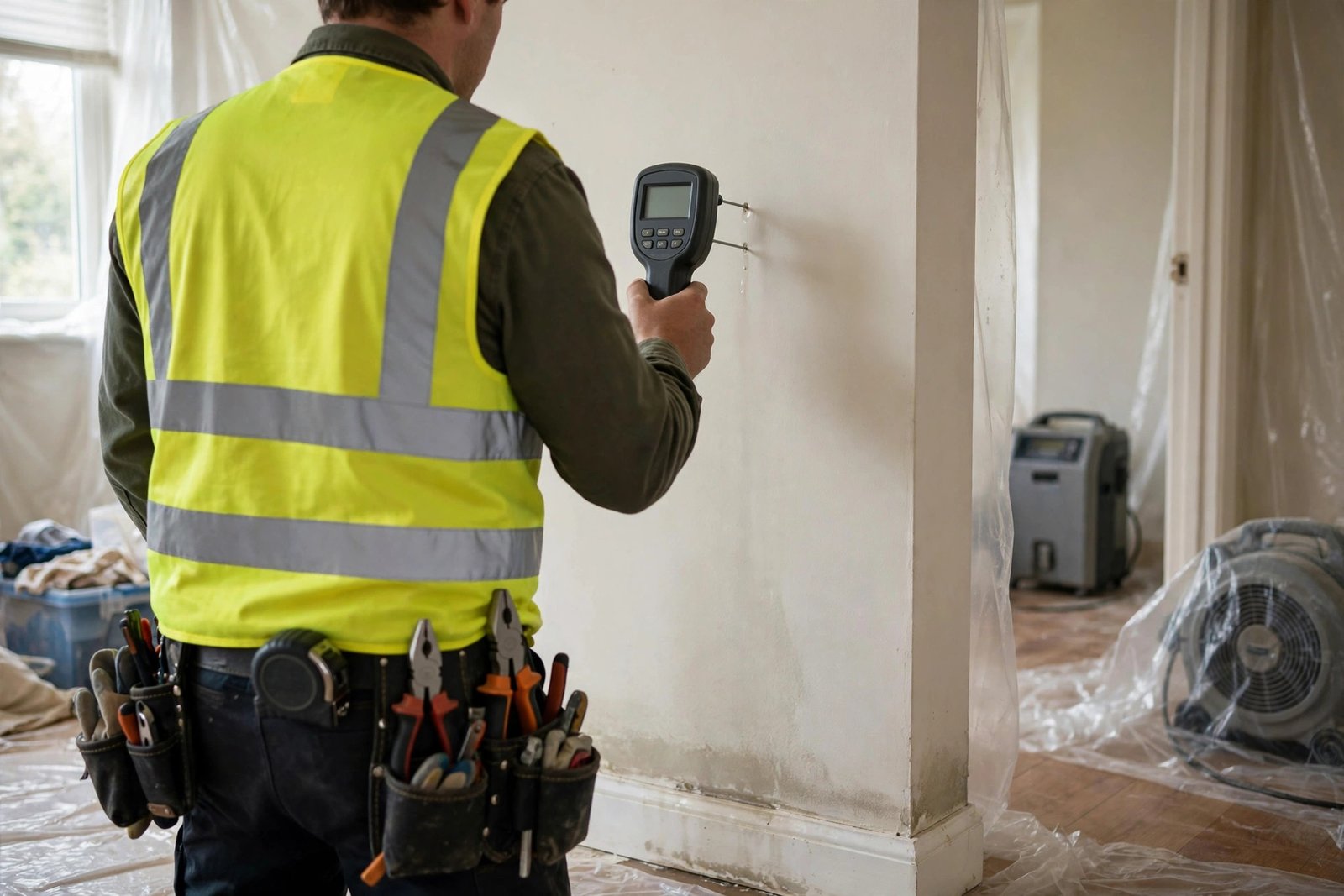
| Hour 4 to 12: Extraction and assessment | Standing water removed; moisture mapping finds hidden water in walls and under floors; documentation for your claim begins |
| Hour 12 to 24: Drying begins | Industrial dehumidifiers and air movers placed; first moisture readings logged; your adjuster is notified with photos and the initial scope |
Documenting for Your Insurance Claim
Your claim lives or dies on documentation, and the best documentation starts before cleanup. Photograph and video every affected room from multiple angles, including waterlines on walls and the water source if you can see it safely. Make a written list of damaged belongings with approximate ages and values. Save any receipts for emergency spending (hotel, supplies). Do not discard damaged items until your adjuster has documented them – bag small items if you must move them. Our crews add professional documentation on top of yours: moisture readings, drying logs, and photo records that adjusters expect. See our full guide to water damage insurance claims in South Carolina.
What NOT to Do (The Mistakes That Cost Homeowners Thousands)
Waiting to “see if it dries” is the most expensive mistake – in Columbia’s humidity, air-drying takes weeks, and the EPA’s 24-to-48-hour mold window does not wait. Tearing out materials before documentation gives your adjuster reason to dispute the claim. Using bleach on porous materials does not kill mold roots and gives false confidence. Hiring the cheapest quote without an itemized scope usually means skipped steps – no moisture mapping, no drying verification – that surface as mold weeks later. And ignoring a small stain “for now” is how slow leaks become structural damage that policies sometimes exclude as gradual.
Sources
Sources
- U.S. EPA - Mold - Mold growth timelines and cleanup guidance.
- Ready.gov - Floods - What to do during and after flooding.
- IICRC - The restoration industry's standards body (S500 water damage standard).
Frequently Asked Questions
Call the restoration company first if water is still flowing or standing – stopping the damage is the priority, and most policies require you to mitigate further damage. Then notify your insurer within 24 hours. We document everything your adjuster will need.
Usually yes for clean-water events, once electricity to flooded areas is off. For sewage backups or heavy floodwater contamination, keep people and pets out of affected areas until professional cleanup is complete.
Yes – move valuables, lift fabrics, take photos, and remove small items from the water. Leave extraction, demolition, and drying to professionals with the right equipment.
On wet drywall, wood, and fabrics, mold can begin within 24 to 48 hours of water exposure, according to the U.S. EPA and FEMA. In Columbia’s humid climate, assume the faster end of that range.
Shut off the main water valve if it is a plumbing failure and you can reach it safely. For storm water, there may be nothing to shut off – contain what you can, protect valuables, and call us. We will talk you through it while the crew is dispatched.
Not necessarily – insurers expect you to mitigate further damage. But document thoroughly before you move or discard anything, and keep receipts for everything you spend. Photos taken before cleanup are your best protection.
Do not wait out the clock.
Do not wait out the clock. Call (803) 555-0147 now – 24/7 emergency response across Columbia, SC. We will talk you through the first steps while the crew is on the way.