Ceiling & Wall Water Damage Repair in Columbia, SC
A brown stain spreading across your ceiling is water telling you where it’s been – not where it is now. Roof leaks, burst pipes upstairs, and overflowing bathrooms soak drywall, insulation, and framing hidden behind paint. Columbia Flood Fix Pros connects you with independent local providers who find the full extent, dry it completely, and repair ceilings and walls to pre-loss condition. (803) 555-0147
The Stain Is the Small Part
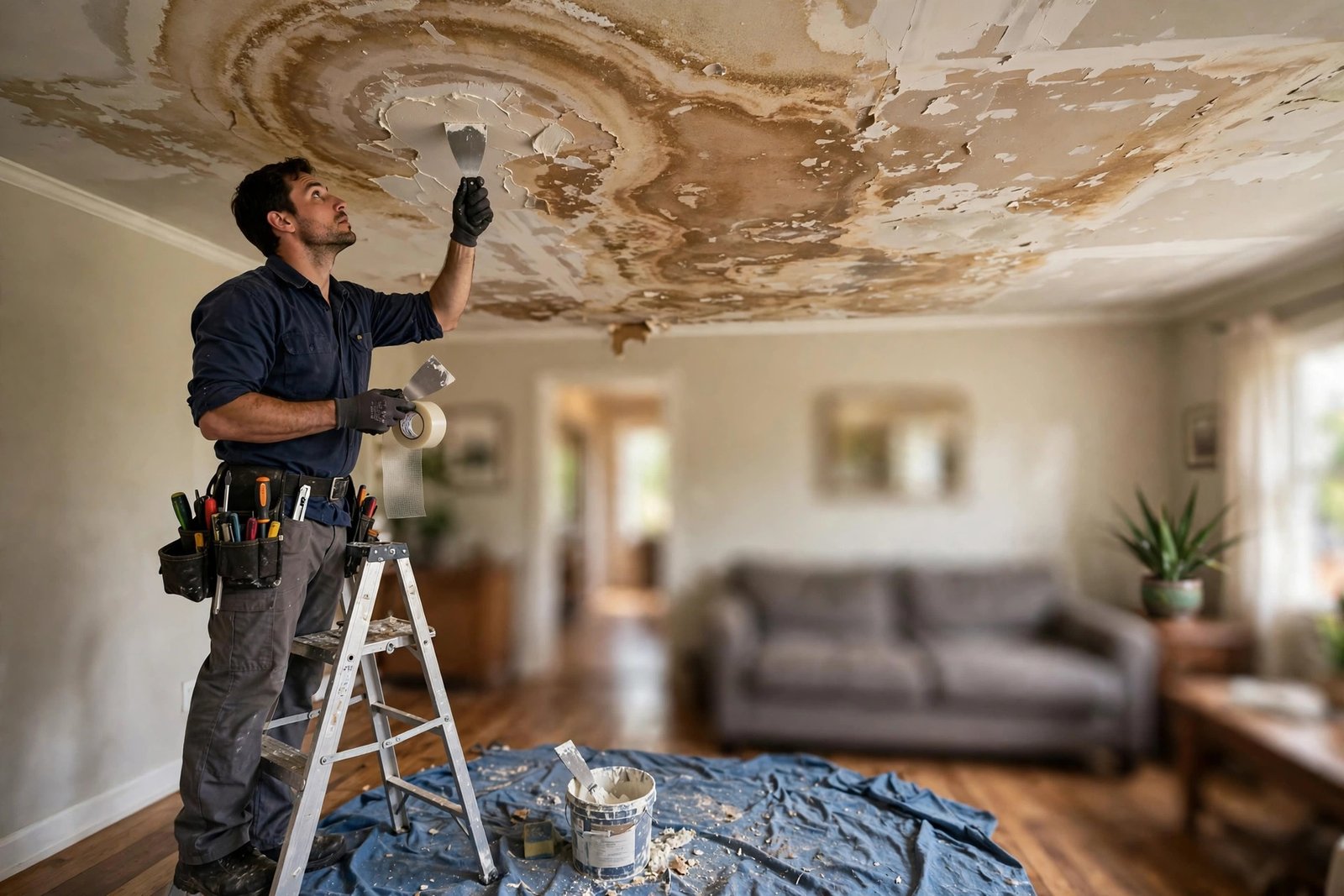
By the time water shows through paint, the cavity behind it is saturated: wet insulation, damp framing, and drywall losing structural integrity. Painting over a water stain without drying the cavity traps moisture – and mold follows within days. Proper repair means opening it up, drying it out, then rebuilding.
The Repair Process
Moisture mapping with meters and thermal imaging to trace the water’s full path, controlled removal of damaged drywall and insulation, structural drying of framing and cavities with verified daily readings, antimicrobial treatment, then rebuild: new drywall, tape, texture matching, primer, and paint. The goal is invisible – you shouldn’t be able to tell where the damage was.
Common Causes in Columbia Homes
Roof leaks after Midlands thunderstorms and tropical systems, supply-line bursts in upstairs bathrooms, overflowing tubs and toilets, HVAC condensate drain clogs (a big one in Columbia’s long cooling season – attic air handlers drip for weeks unnoticed), and ice-maker and dishwasher supply lines.
That Sagging Ceiling Is Urgent
Waterlogged drywall is heavy. A sagging, bulging ceiling can collapse – bringing insulation, water, and debris down with it. If your ceiling is sagging or dripping, don’t stand under it: shut off the water source if you can, and call (803) 555-0147 right away.
Signs of Hidden Water Damage in Walls and Ceilings
Water rarely announces itself politely. Watch for paint bubbling or peeling, brown or yellow stains that grow over weeks, a musty smell in a specific room, drywall that feels soft or spongy to the touch, baseboards pulling away from the wall, and unexplained spikes in your water bill. In Columbia’s humid climate, a faint musty odor behind a wall often means mold is already established inside the cavity. If you spot any of these, don’t wait for it to get worse – hidden damage is always cheaper to fix early, and your insurance prefers early documentation too.
How Providers Match Texture and Paint
An invisible repair is a craft, not luck. The provider identifies your existing texture – orange peel, knockdown, smooth, or skip-trowel – and replicates it with the same application technique, not just a similar-looking product. For paint, the new coat is feathered across a wider area than the repair so there’s no visible edge, and sheen is matched as carefully as color: a flat patch in an eggshell wall catches light wrong and screams “repair.” When the original paint is aged or faded, painting the full wall or ceiling plane is recommended for a uniform finish. You’ll walk the finished work with the provider before it is called done.
Most ceiling and wall damage traces back to a leak above – frequently a burst pipe water damage repair situation. Providers fix the source and the damage together as part of full-service water damage restoration in Columbia.
Ceiling and Wall Repair Timeline
| Step | Typical time |
|---|---|
| Moisture mapping and full assessment | 1-2 hrs |
| Controlled demolition of damaged materials | 4-8 hrs |
| Structural drying of cavities and framing | 3-5 days |
| Rebuild: drywall, texture, prime, paint | 1-2 weeks |
What Affects the Cost of Ceiling and Wall Water Damage Repair
Hidden damage is the main variable: a small stain can hide soaked insulation and framing across several feet, texture matching adds skilled labor, and full-wall or full-ceiling repaints cost more than spot repairs. The provider who takes your call confirms the scope, availability and price with you directly before any work begins. Never accept a firm quote over the phone.
The Equipment Behind Invisible Repairs
Providers use thermal imaging cameras and calibrated moisture meters to map exactly how far the water spread before any cutting begins, then industrial air movers and LGR dehumidifiers to dry framing and cavities to verified dry standards.
Water Category Depends on the Source Above
Ceiling and wall damage has no fixed category: a supply-line leak is Category 1 (clean), an overflowing tub or HVAC condensate is Category 2 (gray), and a toilet overflow or roof leak that traveled through debris can be Category 3. The source determines whether materials can be dried in place or must be removed.
Sources
Sources
- U.S. EPA Mold - Mold growth timelines and cleanup guidance.
- IICRC - The restoration industry's standards body (S500 water damage standard).
Frequently Asked Questions
Where can I find ceiling repair near me in Columbia, SC?
Right here in Columbia, SC. Call (803) 555-0147 and one call connects you with an independent local provider who maps the moisture, removes the damaged drywall, dries the cavities thoroughly, and rebuilds with texture matching. The goal is simple: when the work finishes, the repair should disappear and your ceiling should look like new again.
Can you match my ceiling texture?
Yes, providers can match orange peel, knockdown, smooth, and popcorn-adjacent finishes, so the repaired spot blends right in with the rest of your ceiling. Texture matching is part of every ceiling repair, because a patch that stands out is not really finished. The time is taken to get the look right, so the repair stays invisible.
How do you know how far the water spread?
Providers use moisture meters and thermal imaging cameras to find exactly how far the water has spread before cutting anything. Water migrates along framing and inside wall cavities far beyond the visible stain, so a small mark on the surface can hide a much bigger wet area behind it. Mapping first means opening only what needs drying.
Do I need to replace insulation too?
Yes, if your fiberglass insulation got wet, it needs to come out. Wet fiberglass insulation loses its R-value and traps moisture against the framing, which keeps the cavity damp and invites more trouble down the road. The provider removes the wet insulation and replaces it as part of the repair, so the wall or ceiling dries properly.
Is a small stain worth calling about?
Yes, a small stain is definitely worth a call. Small stains often mean a slow, ongoing leak, and those are the kind of leaks policies sometimes exclude as gradual damage. Catching and documenting it early protects both your home and your claim, because you have a record from the start. A provider can check it out and find the source.
How much does ceiling and wall water damage repair cost?
It depends on the size of the damaged area, how far the water spread behind the surface, texture and finish matching, and whether full-wall or full-ceiling repainting is needed. No firm price is possible over the phone. The provider looks at the damage in person and confirms the scope and price with you directly before any work begins.
Will my insurance cover a slow leak?
Sudden leaks are typically covered, while slow, ongoing leaks can be excluded as gradual damage if the insurer believes you knew about it. That is why early documentation matters so much. Catching and reporting a stain early protects your claim, because you can show when the problem first appeared. The provider helps you document it properly for your insurer.
How long before you can paint over the repair?
Only after the cavity is verified dry by moisture meters, so please do not rush to paint. Painting over damp drywall traps moisture and invites mold, which turns a finished repair into a new problem. Drying typically takes 3 to 5 days. Then the provider rebuilds, textures, primes, and paints, so the ceiling looks right and stays dry.
Can water damage in the ceiling affect my electrical?
Yes, water and wiring do not mix, so providers take this very seriously. They check for water near fixtures, junction boxes, and wiring during assessment, and look closely at anything that could be unsafe. Nothing gets rebuilt until affected electrical is verified safe, because a hidden electrical risk is never worth rushing past in your home.
Don't paint over water damage - fix what's behind it.
Don’t paint over water damage – fix what’s behind it. Call (803) 555-0147 for ceiling and wall water damage repair in Columbia, SC.