
Basement Flood Cleanup in Columbia, SC
Basements flood first and dry last. In Columbia’s older homes – Shandon, Elmwood, Earlewood – basements and crawl spaces sit below grade where every heavy rain, plumbing leak, and rising water table heads straight for them. When you need basement flood repair in Columbia, SC, one call to Columbia Flood Fix Pros connects you with an independent local provider who pumps out flooded basements, dries them completely, and treats them against mold. (803) 555-0147
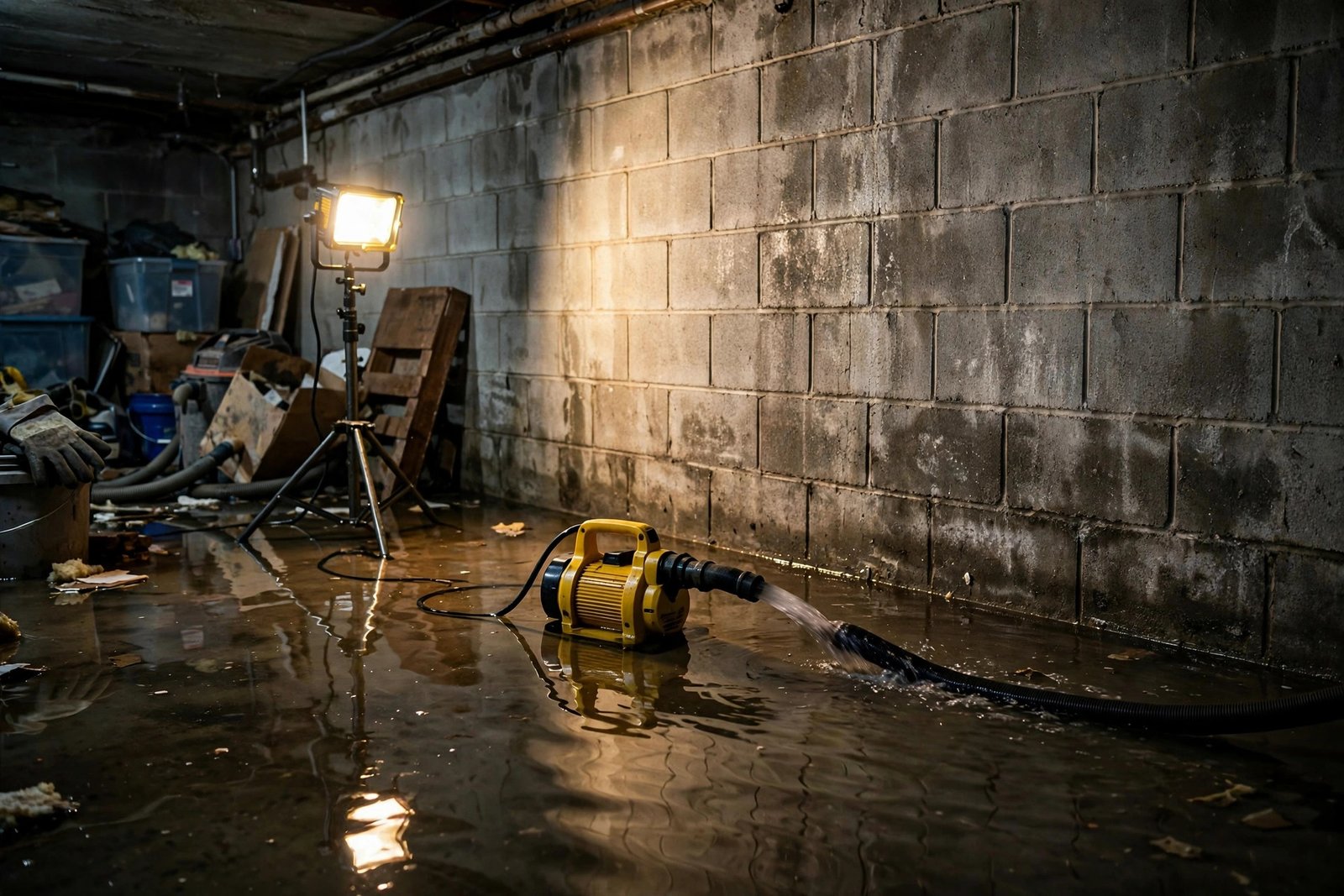
Why Basements Are the Hardest to Dry
Below-grade spaces have poor airflow, cool surfaces that condense moisture, and concrete that wicks water for weeks. A basement that “looks dry” after mopping can still hold gallons in the slab, block walls, and framing. Providers use moisture meters and thermal imaging to find it, then commercial dehumidification sized for below-grade conditions.
The Basement Flood Process
Standing water pumped out, debris and ruined materials removed, block walls and slab inspected for seepage points, industrial dehumidifiers and air movers run for days with daily moisture readings, antimicrobial treatment on framing and masonry, and a final verification that every surface reads dry before the job is signed off.
Common Basement Water Sources in Columbia
Foundation seepage after heavy rain, failed or missing sump pumps, water heater failures, washing machine hoses, sewer backups pushing up through floor drains, and grading that slopes toward the house instead of away. The provider identifies the source during cleanup so you can fix it, not just mop it.
The Mold Risk Below Grade
The EPA‘s 24-to-48-hour mold window applies double in basements: cool, dark, humid, and full of organic material (wood framing, drywall, stored cardboard). A musty basement smell is mold already growing. Fast professional drying is the most reliable way to reduce that risk.
What Providers Check During a Basement Job
Providers run a checklist on every flooded basement, because the visible water is never the whole story. They check the water heater and laundry connections (the two most common indoor sources), inspect the sump pump – if you have one – for failure, look for foundation cracks and seepage points along the walls, test floor drains for sewer backup, and moisture-map the sill plates and rim joists where the basement meets the framing above. That last one matters most: wet sill plates rot silently and compromise the structure. You get the full findings in plain language, plus honest recommendations on what to fix so it doesn’t happen again.
Basement Waterproofing After the Cleanup
Cleanup solves today’s flood; basement waterproofing prevents the next one. Interior drain tile with a sump pump handles seepage and rising water tables. Exterior grading – soil sloping away from the foundation – stops surface water from pooling against walls. Foundation crack injection seals the entry points found during cleanup. For chronic issues, exterior waterproofing membranes are the gold standard, though they’re a bigger project. The provider will tell you which of these your basement actually needs based on what turned up during the job – no upsell, just the findings.
Basement jobs almost always require extended structural drying – below-grade spaces hold moisture longer. Water damage restoration services in Columbia include daily moisture verification until every material reads dry.
Basement Flood Cleanup Timeline
| Step | Typical time |
|---|---|
| Pump-out of standing water | 2-6 hrs |
| Debris and ruined material removal | 4-8 hrs |
| Moisture mapping of slab, walls, and sill plates | 2-4 hrs |
| Commercial dehumidification | 3-5 days |
| Antimicrobial treatment and final verification | 4-8 hrs |
What Affects the Cost of Basement Flood Cleanup
Below-grade drying takes longer and costs more: the depth of water, whether the basement is finished or unfinished, concrete and block walls that dry slowly, and the water source (seepage vs. plumbing failure vs. sewer backup changes the protocol entirely). The provider who takes your call confirms the scope, availability and price with you directly before any work begins. Never accept a firm quote over the phone.
The Equipment Behind Basement Drying
Providers use submersible pumps for the initial pump-out, LGR dehumidifiers sized for below-grade conditions, industrial air movers to keep air circulating in dead-air corners, and calibrated moisture meters plus thermal imaging to find water hiding in the slab and block walls.
Basement Water Category Depends on the Source
There is no single category for basement flooding: a supply-line leak is usually Category 1 (clean), foundation seepage is typically Category 2 (gray), and a sewer backup pushing up through floor drains is Category 3 (black). Identifying the source during the first visit determines the safety protocol, what gets removed, and how disinfection is handled.
Sources
Sources
- U.S. EPA Mold - Mold growth timelines and cleanup guidance.
- IICRC - The restoration industry's standards body (S500 water damage standard).
- Ready.gov Floods - Flood preparedness and insurance guidance.
Frequently Asked Questions
What basement waterproofing options work best in Columbia, SC?
The right basement waterproofing in Columbia, SC depends on how water gets in. Interior drain tile and sump pumps handle hydrostatic pressure under the slab; exterior excavation and membranes stop water at the foundation wall; grading and gutter fixes handle surface water. A provider assesses your basement during the visit and tells you honestly which approach fits.
Do you handle basement repair in Columbia, SC after water damage?
Yes, basement repair work starts where cleanup ends. The provider replaces water-damaged drywall and insulation, treats framing against mold, and addresses the entry points, including foundation cracks, failed sump pumps, and bad grading, so the same flood is less likely to happen twice. You get a dry, repaired basement, not just a cleanup, explained in plain language.
Do you handle basement flood repair or just cleanup?
Both. Basement flood repair starts with full cleanup and drying, then addresses what the water damaged and what let it in. The provider fixes the source where possible and gives you honest recommendations for the rest, so you are not mopping up the same flood twice. That means a basement that is dry, repaired, and better protected.
What does flooded basement repair involve?
Flooded basement repair has four phases. First, emergency pump-out of standing water. Second, removal of unsalvageable materials, including wet drywall, insulation, and carpet. Third, structural drying verified with moisture meters. Fourth, repairs, with drywall, flooring, and finishes restored to pre-loss condition. The provider documents every phase for your insurance claim, so you have a complete record from start to finish.
How long does basement drying take?
Typically, basement drying takes 3 to 5 days of monitored commercial dehumidification, depending on how much water entered and what materials are affected. Concrete and block walls dry slower than open air, which is why below-grade spaces need extra time. The provider checks moisture readings daily, so the basement is verified truly dry before repairs begin.
Should I run my own fans and dehumidifier?
Household equipment helps at the margins, but it cannot match commercial dehumidifiers that pull gallons per day. Without moisture meters, you also cannot verify anything is actually dry, so a basement can look dry while the slab and walls still hold water. A professional provider uses commercial equipment and daily readings to dry the space completely and prove it.
Do you install sump pumps?
Sump pump installation itself is a separate contractor job, not part of the cleanup and drying work. What a provider does is tell you honestly if a sump pump, better grading, or a backwater valve is what your basement actually needs, based on the flooding found during your job, and what to ask a contractor for when you hire one.
Will my homeowner's insurance cover a flooded basement?
Sudden events, like burst pipes and appliance failures, are usually covered by homeowner’s insurance. Seepage through foundations and floodwater from outside typically are not, unless you carry flood or seepage endorsements. The provider documents everything for your claim, so your insurer has a clear record of the source, the damage, and the work needed to dry and repair your basement.
How much does basement flood cleanup cost?
It depends on the depth of water, the water source, and whether the basement is finished or unfinished. Below-grade drying takes longer than above-grade work, and finished basements and contaminated water add to the scope. No firm price is possible without seeing the space. The provider who takes your call confirms the scope and price directly before work begins.
Will my finished basement need to be torn out?
Not necessarily. Drywall below the waterline usually has to go, but framing, masonry, and hard surfaces can often be dried and disinfected. The provider moisture-maps first and removes only what is unsalvageable, with your approval, so everything that can be saved safely is saved. You will know exactly what needs to go and why before demolition starts.
How do I keep my basement from flooding again?
Fix the source identified during cleanup. Interior drain tile with a sump pump helps with seepage, regrading soil away from the foundation handles surface water, and a backwater valve protects against sewer backups. The provider will tell you honestly which one your basement actually needs, based on the findings, so you spend money on the fix that stops the next flood.
Is a musty basement smell always mold?
Usually, yes. That musty odor is microbial growth already established in damp materials, so it is a warning sign, not just a smell. The EPA’s 24-to-48-hour mold window applies double below grade, where cool, dark, humid conditions help growth spread. Do not mask it with air fresheners. Get it dried and treated, and the provider will find the moisture behind it and address the problem at the source.
A wet basement only gets worse underground.
A wet basement only gets worse underground. Call (803) 555-0147 now for basement flood cleanup in Columbia, SC.