Flood Damage Cleanup in Columbia, SC
Columbia knows flooding. Between the Broad and Saluda rivers, Congaree Creek, summer thunderstorms, and tropical systems pushing up from the coast, Midlands homes take on water more often than most. Columbia Flood Fix Pros connects homeowners with independent local providers for flood damage restoration across Columbia, SC – from pump-outs to sanitizing to structural drying. (803) 555-0147
What Flood Cleanup Involves
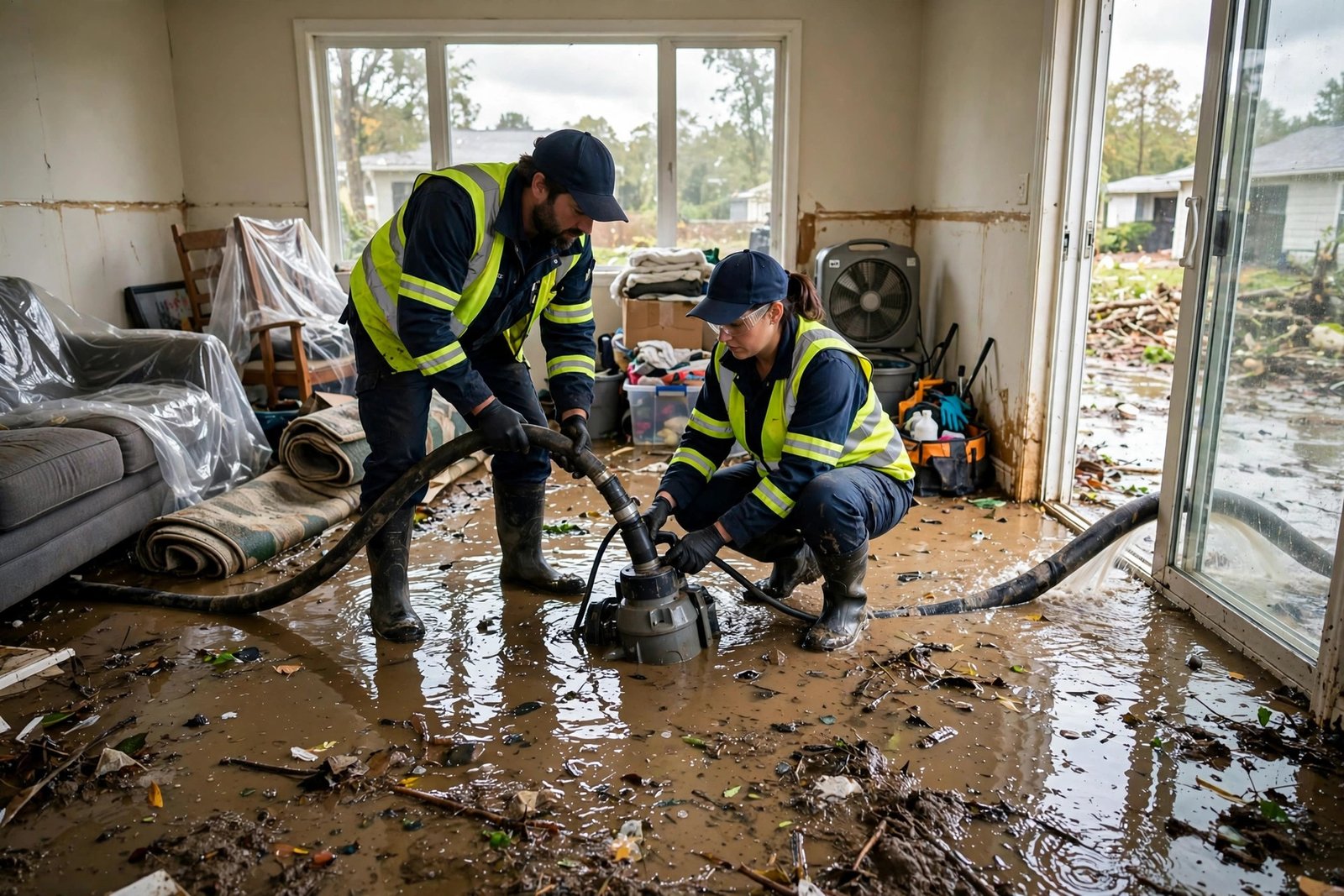
Floodwater is never clean water. Even rain-driven flooding picks up soil, chemicals, and bacteria on its way in, and river flooding carries worse. A professional cleanup covers: pumping out standing water, removing flood-soaked porous materials (carpet pad, insulation, lower drywall), pressure-washing and disinfecting hard surfaces, running industrial dehumidification until moisture meters read dry, and applying antimicrobial treatments to framing and subfloors.
The 2015 Flood Lesson
The October 2015 floods hit the Columbia metro harder than anything in a generation – thousands of homes damaged, many in areas that had never flooded before. The lasting lesson: floodwater leaves contamination and hidden moisture behind walls and under floors. Surface cleanup without moisture mapping and structural drying is how mold colonies start weeks later.
Flood Cuts: Why Providers Remove Lower Drywall
When floodwater soaks drywall, the paper backing becomes a mold buffet. Industry standard is a “flood cut” – removing drywall 12 to 24 inches above the visible waterline – so wall cavities can be dried and treated. It looks dramatic; it’s what prevents a much bigger problem.
Insurance and Flood Claims
Standard homeowner policies typically exclude rising-water flooding – that needs separate flood insurance through the NFIP or private carriers. But storm-driven rain entering through wind-damaged roofs or windows is usually covered. Providers document waterlines, damage, and drying with the photos and reports adjusters require either way.
Flood Cleanup Timeline: What to Expect
Day one is pump-out and debris removal: standing water extracted, ruined materials bagged and removed, and the first antimicrobial treatment applied. Days two through five are structural drying – industrial dehumidifiers and air movers running continuously with daily moisture readings. Only when every material reads dry do repairs start: drywall, insulation, flooring, and paint. A typical single-room flood takes one to two weeks from pump-out to finished repairs; whole-house flooding takes longer. The provider gives you a realistic timeline at the first visit and updates it as drying progresses – no vague promises, just readings and dates.
Protecting Your Home from the Next Flood
After cleanup, the smart move is making the next flood hurt less. Elevate critical utilities – water heaters, furnaces, electrical panels – above the known flood line. Install a sump pump with battery backup if your basement or crawl space takes water. Use flood-resistant materials in vulnerable areas: tile instead of carpet, closed-cell insulation instead of fiberglass. Keep gutters clear and grade soil away from your foundation. And review your flood insurance – standard homeowner policies exclude rising water, and Columbia’s flood maps have surprised plenty of homeowners who thought they were safe.
After pump-out and debris removal, verified structural drying and dehumidification is what reduces the risk of mold and makes repairs last. It is a core part of Columbia water damage restoration services.
Flood Damage Cleanup Timeline
| Step | Typical time |
|---|---|
| Pump-out and debris removal | 1-2 days |
| Flood cuts and removal of soaked materials | 1-2 days |
| Disinfection and antimicrobial treatment | 4-8 hrs |
| Structural drying with daily readings | 3-5 days |
| Repairs and rebuild | 1-2 weeks |
What Affects the Cost of Flood Damage Cleanup
Flood jobs cost more than clean-water jobs because of contamination: the water depth and square footage, the amount of porous material that must be removed (drywall, insulation, carpet pad), disinfection requirements, and drying time. The provider who takes your call confirms the scope, availability and price with you directly before any work begins. Never accept a firm quote over the phone.
The Equipment Behind Flood Cleanup
Providers run submersible pumps, truck-mounted extractors, LGR dehumidifiers, and HEPA air scrubbers – the combination needed to move floodwater out, dry the structure, and keep contaminated air from spreading through your home.
Why Floodwater Is Always Category 3
Floodwater that enters from outside is classified as Category 3 (black water) no matter how clean it looks – it picks up soil, chemicals, fuel residue, and often sewage on its way in. That classification is why flood cleanup requires protective equipment, removal of soaked porous materials, and disinfection of everything that remains. It is never a mop-and-fan job.
Sources
Sources
- Ready.gov Floods - Flood preparedness and insurance guidance.
- FloodSmart.gov - The National Flood Insurance Program's official site.
- U.S. EPA Mold - Mold growth timelines and cleanup guidance.
Frequently Asked Questions
What about mold remediation after water damage?
Drying within the first 24 to 48 hours greatly reduces the risk of mold growth, so fast action is your best protection. If mold is already present, it needs dedicated mold remediation after water damage, with containment, removal of affected materials, and HEPA filtration. The provider assesses the extent during the visit and gives you straight guidance on the right next steps.
Do you offer flood damage repair in Irmo, SC?
Yes. Irmo is part of the Columbia metro area this site serves, and one call connects you with an independent local provider for flood damage repair in Irmo, SC, from pump-out and debris removal through structural drying and sanitizing. That means one provider for the whole job instead of juggling separate contractors. Call (803) 555-0147 to get connected.
Is floodwater dangerous to clean up myself?
It can be, so please take it seriously. Floodwater carries bacteria, chemicals, and sometimes sewage. Without protective equipment and proper disinfection, DIY flood cleanup risks illness and leaves contamination behind in your home. Professional providers have the gear, the training, and the disinfectants to clean it up safely and thoroughly for you.
How long does flood cleanup take?
Pump-out and debris removal usually take a day or two, depending on how much water came in. Full structural drying typically takes 3 to 5 days of monitored dehumidification after that. Repairs come after drying, and how long they take depends on the extent of material removal. The provider gives you a realistic timeline at the first visit and updates you as drying progresses.
Do you handle the tear-out and the rebuild?
The providers you are connected with handle extraction, demolition of unsalvageable materials, drying, and sanitizing, which is the full mitigation phase of the job. That work is done carefully and documented along the way. Providers also coordinate repairs to return your home to pre-loss condition, so the handoff from cleanup to rebuild stays smooth and nothing important gets missed.
What about my belongings?
A provider helps you triage your belongings, because not everything needs to go. Non-porous items can usually be cleaned and saved, which is a relief when the water has spread. Porous items soaked in floodwater, like mattresses, upholstered furniture, and carpet pad, generally cannot be safely salvaged. The provider walks you through what can stay and what should go.
How much does flood damage cleanup cost in Columbia?
It depends on the water depth, the square footage affected, how much porous material has to be removed, disinfection requirements, and drying time. Contaminated flood jobs cost more than clean-water jobs because of the extra removal and sanitizing involved. The provider who takes your call confirms the scope and price with you directly before any work begins.
Is flood damage covered by my homeowner policy?
Usually not for rising water, because that requires separate flood insurance through the NFIP or a private carrier. Rain entering through wind-damaged roofs or windows is typically covered under your homeowner policy, though. Either way, the provider documents waterlines and damage carefully, so you have the photos and reports your adjuster needs for either kind of claim.
Do you offer flood damage restoration near me in Columbia, SC?
Yes, if you are in the Columbia metro, local providers serve your area. One call connects you with an independent provider for flood damage restoration, from pump-out through structural drying and sanitizing, so you are not chasing multiple contractors. Call (803) 555-0147 to get connected and confirm the provider’s availability directly.
How long does full flood recovery take?
A typical single-room flood runs one to two weeks from pump-out to finished repairs, while whole-house flooding takes longer. Drying alone is usually 3 to 5 days of monitored dehumidification, and repairs start only after everything reads dry. The provider gives you a realistic timeline at the first visit and keeps you updated as the drying progresses.
Should I buy flood insurance if I'm not in a flood zone?
It is worth a serious look, because the 2015 floods damaged thousands of Columbia homes outside mapped flood zones. Flooding is the most common natural disaster in the US, and maps do not catch every risk. If your home has ever taken water, review your coverage before storm season, so you are not caught without protection when the next storm hits.
Who do I call for flood cleanup in Columbia?
Call (803) 555-0147. Flood cleanup in Columbia means more than pumping water out. Contaminated floodwater needs sanitizing, affected materials need removal, and the structure needs verified drying before repairs. One call connects you with an independent local provider who handles all of it and documents everything for your insurance claim, so you have one point of contact.
Flood damage can't wait for business hours.
Flood damage can’t wait for business hours. Call (803) 555-0147 now – flood damage cleanup in Columbia, SC.