Emergency Water Extraction in Columbia, SC
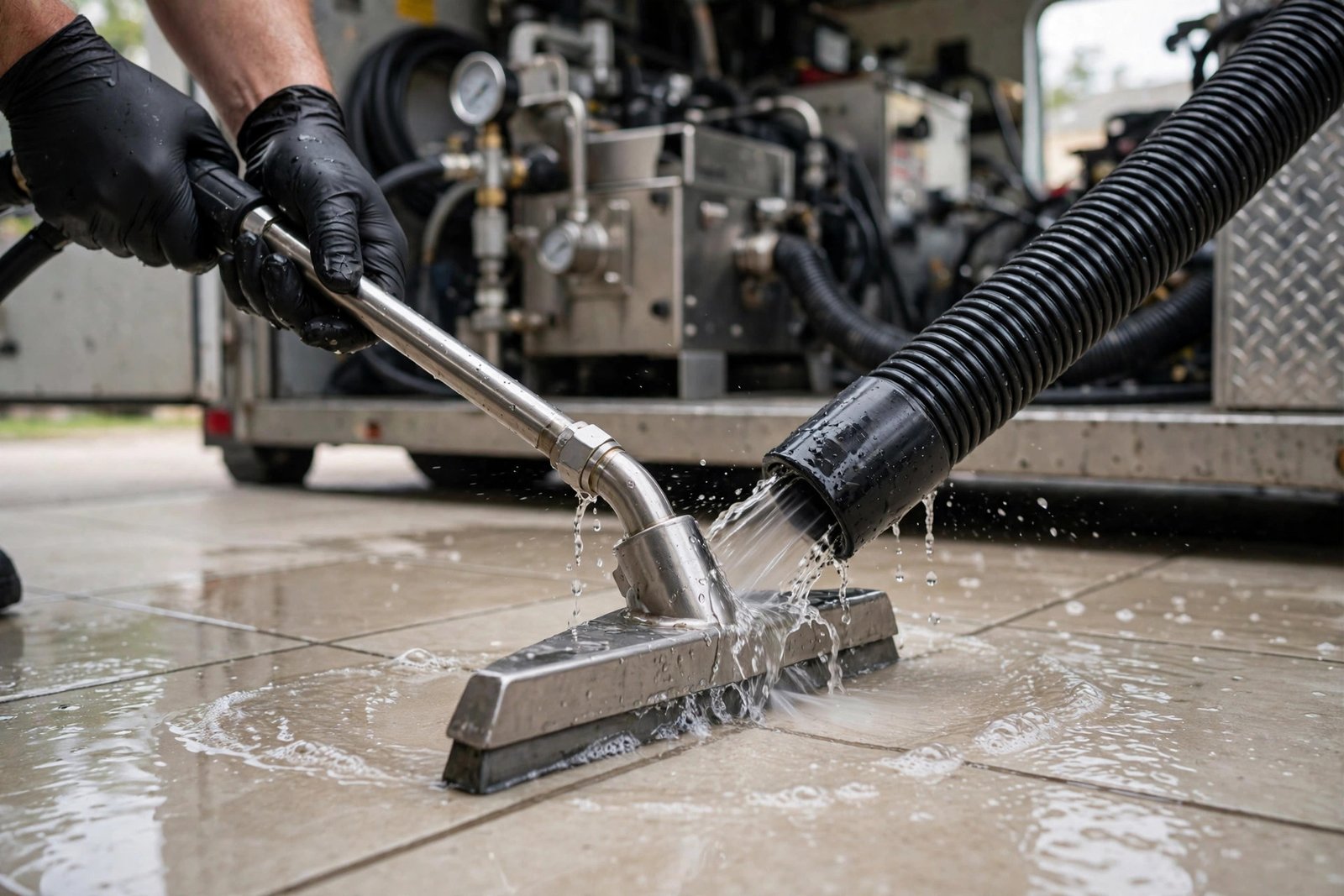
When water is pouring in or standing inches deep, the first job is getting it out – fast. One call to Columbia Flood Fix Pros connects you with an independent local provider who performs emergency water extraction across Columbia, SC: commercial-grade pumps and truck-mounted extractors that remove hundreds of gallons per hour, not the slow drip of consumer equipment. (803) 555-0147
When You Need Emergency Extraction
Call immediately for burst pipes, water heater failures, washing machine overflows, storm flooding, sewage backups, and any standing water over your floors. The EPA and FEMA warn that mold can start within 24 to 48 hours on wet materials – extraction in the first hours is what separates a drying job from a demolition job.
The Extraction Process
First the provider stops the source if it’s still flowing – main water shutoff for plumbing failures. Then truck-mounted and portable extractors pull standing water from floors, carpets, and hard surfaces. The provider lifts carpet to extract the pad beneath (soaked pad almost always has to go), checks inside walls and under cabinets with moisture meters, and moves straight into structural drying so nothing stays wet long enough to grow mold.
What Providers Extract Water From
Carpet and carpet pad, hardwood and laminate flooring, tile and concrete slabs, basements, crawl spaces, garages, and commercial spaces. For sewage-contaminated water, extraction follows strict sanitary protocols with disinfection – see our Sewage Backup Cleanup page.
Why Speed Matters More Than Anything
Water wicks upward into drywall at roughly an inch per hour in the early stages and migrates under flooring within hours. Insurance adjusters know this: fast professional extraction routinely saves thousands in avoided demolition and mold remediation. The cheapest restoration is the one that starts today.
What Happens After Extraction
Extraction is step one, not the whole job. Once standing water is out, the provider moisture-maps the entire affected area – water migrates under flooring and inside walls far beyond where it pooled. Wet carpet pad gets removed (it can’t be salvaged), and the provider lifts carpet to dry the subfloor beneath. Then commercial air movers and dehumidifiers run for days with daily readings until everything hits dry standard. Only then do repairs begin. Companies that extract and leave skip the steps that matter most – that’s the difference between a dry home and a mold problem in three weeks.
Preparing for the Provider's Visit
While you wait for the provider: shut off the water source if it’s safe to do so, turn off electricity to flooded areas, move valuables and electronics to dry ground, and lift curtains and furniture skirts off wet floors. Don’t use a household vacuum on standing water, and don’t walk through sewage-contaminated water. Take photos of the damage for your insurance claim – the more documentation, the smoother the process.
Once the standing water is out, many jobs continue with flood damage cleanup and full structural drying – extraction is the critical first step of water damage restoration in Columbia, SC.
Emergency Water Extraction Timeline
| Step | Typical time |
|---|---|
| Your call connects you with a local provider | First step |
| Source shutoff and moisture mapping | 30 min - 1 hr |
| Standing water extraction | 2-6 hrs |
| Carpet lift and pad removal | 1-2 hrs |
| Handoff to structural drying | 12-72 hrs |
What Affects the Cost of Emergency Water Extraction
The biggest cost drivers are the volume and depth of standing water, the water category (clean vs. contaminated), the square footage affected, and how fast you call – acting sooner usually means less demolition and less drying time. The provider who takes your call confirms the scope, availability and price with you directly before any work begins. Never accept a firm quote over the phone.
The Equipment Behind Fast Extraction
Providers use truck-mounted extractors, submersible pumps, and calibrated moisture meters – commercial-grade equipment that removes hundreds of gallons per hour and verifies that water is truly gone, not just out of sight.
Water Categories: Know What You're Dealing With
Restoration professionals classify water as Category 1 (clean water from supply lines), Category 2 (gray water from appliances or showers), or Category 3 (black water: sewage or contaminated floodwater). The category determines the safety protocol, the equipment, and what materials must be removed rather than dried – which is why the first assessment always identifies the source.
Sources
Sources
- U.S. EPA Mold - Mold growth timelines and cleanup guidance.
- IICRC - The restoration industry's standards body (S500 water damage standard).
- Ready.gov Floods - Flood preparedness and insurance guidance.
Frequently Asked Questions
What is water mitigation in Columbia, SC?
Water mitigation in Columbia, SC is the emergency phase of a water loss. It means stopping the water source, extracting the standing water, removing materials that cannot be saved, and drying the structure. Mitigation limits further damage. Restoration, the repairs and rebuild, comes after that. When you call (803) 555-0147, you are connected with an independent local provider who handles these phases.
Where can I get water removal in Columbia, SC?
For water removal in Columbia, SC, call (803) 555-0147. One call connects you with an independent local provider whose truck-mounted extractors and commercial pumps remove hundreds of gallons per hour. That is far beyond what a wet vac can do, so standing water comes out fast instead of sitting and soaking deeper into your floors, walls, and belongings.
How quickly can you get here?
That depends on the provider’s schedule and where your home is in the Columbia area, and the provider confirms timing with you directly on the call. What you can control is calling as soon as you spot standing water, because every hour of soaking adds damage. Call (803) 555-0147 and you are connected with a local provider right away.
How much water can your equipment remove?
Professional truck-mounted extractors and commercial pumps remove hundreds of gallons per hour, which is orders of magnitude faster than wet vacs or mops. That speed matters when water is spreading across your floors and soaking into walls and flooring. The local provider you are connected with brings commercial equipment, pulls the standing water out, and moves straight into drying.
Do I need to shut off my water first?
If a pipe burst or an appliance is leaking, yes, turn off the main water valve if you can do it safely. That stops more water from pouring in while you arrange help. If you cannot find the valve, or it is unsafe to reach, call (803) 555-0147 and the provider you are connected with will walk you through it step by step.
Will extraction damage my floors?
Professional extraction is designed to protect your flooring, not damage it. What damages floors is water sitting on them, soaking in hour after hour and warping wood, lifting laminate, and staining carpet. Extraction pulls that water out before it can do more harm. Providers work carefully around your floors, so the extraction itself prevents damage instead of causing it.
How much does emergency water extraction cost?
The cost depends on the volume and depth of the standing water, the water category, the square footage affected, and how much drying the job needs afterward. No honest price can be set without seeing the water, the rooms, and the materials involved. The provider who takes your call confirms the scope and price with you directly before any work begins.
How long until my home is completely dry?
Extraction itself takes hours once the provider starts, because commercial equipment removes standing water fast. Structural drying usually runs 3 to 5 days of monitored commercial dehumidification after that. Repairs start only after moisture meters confirm every material is at dry standard. The provider checks the readings daily, so nothing gets rebuilt while it is still wet underneath.
What is emergency water removal, and how fast can you start?
Emergency water removal is the first phase of professional extraction: truck-mounted pumps and submersible pumps remove standing water before it wicks into drywall and flooring. How soon work starts depends on the provider’s availability, which the provider confirms with you on the call. Call (803) 555-0147 to get connected, because every hour of standing water adds to the damage.
Will my homeowner insurance cover emergency extraction?
Sudden events like burst pipes, water heater failures, and appliance overflows are typically covered under homeowner policies. That is good news when you are facing an emergency, but documentation still matters. The provider documents the loss with photos and moisture logs, so your adjuster has what they need to review the claim and move it forward.
What does water damage cleanup involve in Columbia?
Water damage cleanup in Columbia means the full job, not just pumping water out. It covers emergency extraction of standing water, removal of unsalvageable materials, sanitizing affected areas, and verified structural drying with commercial dehumidifiers and moisture meters. When you call (803) 555-0147, you are connected with an independent local provider who handles these phases across Columbia, SC.
What happens when I call about a water emergency at 2 AM?
Call (803) 555-0147 and you are connected with an independent local water damage provider serving the Columbia area. Water emergencies do not keep office hours, and a 2 AM flood cannot wait until morning. The provider talks through what is happening, explains the next steps, and confirms availability and scheduling with you directly on that call.
Standing water won't wait - neither should you.
Standing water won’t wait – neither should you. Call (803) 555-0147 now for emergency water extraction in Columbia, SC.