Water Damage Restoration in Cottontown, Columbia, SC
Cottontown is North Columbia’s up-and-coming district – historic homes being renovated, new businesses moving in, and a mix of longtime residents and newcomers. That renovation wave brings its own water risks: construction-phase plumbing left exposed, old systems stressed by remodels, and long-vacant houses with dormant leaks discovered mid-renovation. Columbia Flood Fix Pros connects Cottontown homeowners, flippers, and contractors with independent local water damage restoration providers. (803) 555-0147 Serving ZIP code 29203
Common Water Damage Problems in Cottontown
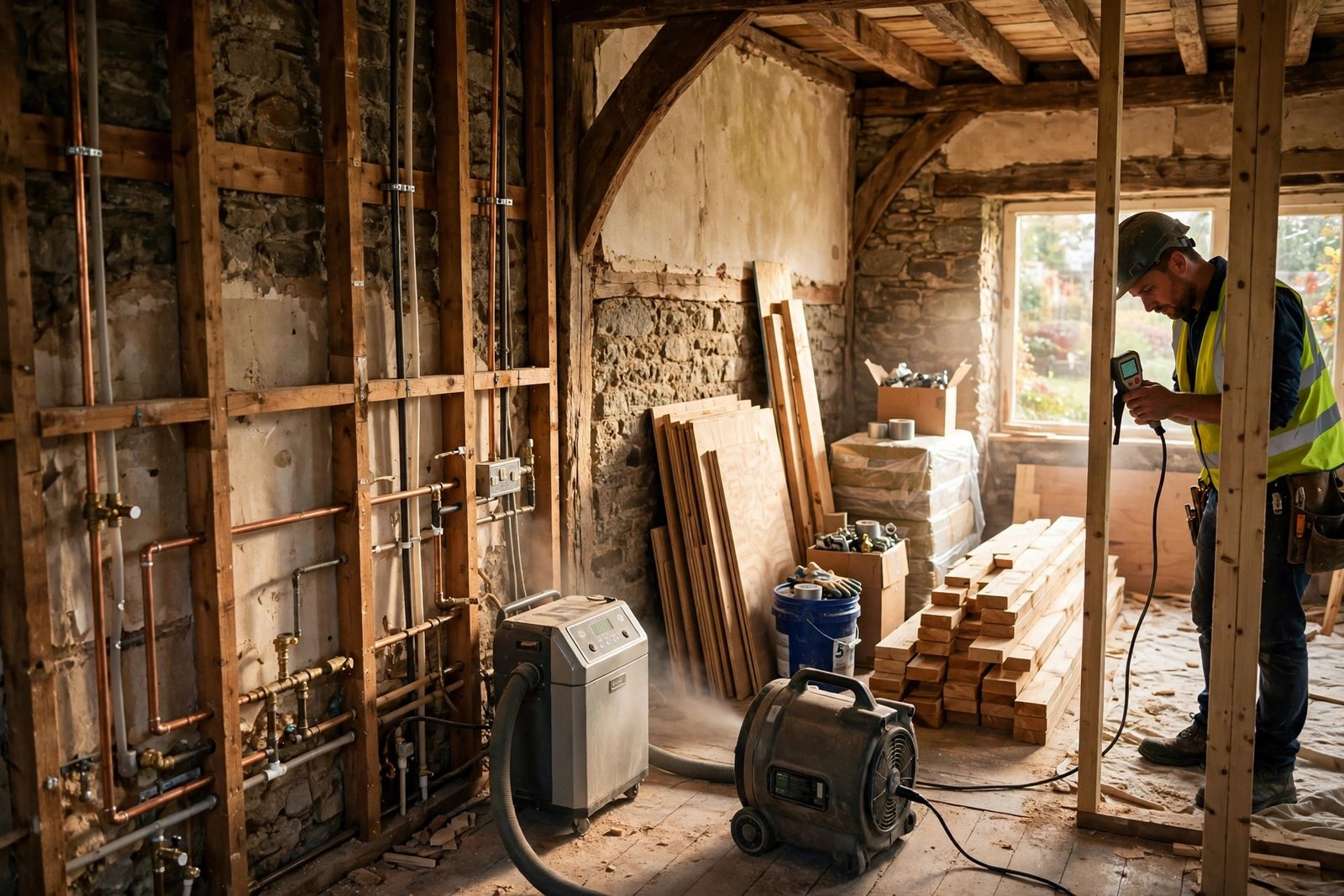
Renovation-related leaks (supply lines left uncapped, fixtures installed wrong), dormant leaks discovered during gut renovations, aging roofs on houses awaiting restoration, burst pipes in vacant properties during freezes, and storm water on lots with poor drainage. Contractors also run into old damage behind walls once demolition starts.
Water Damage Services in Cottontown
Emergency water extraction, flood damage cleanup, sewage backup cleanup, storm damage restoration, burst pipe repair, ceiling and wall repair, and structural drying. For renovation projects, providers coordinate with your contractor’s timeline so mitigation keeps the remodel on schedule, and they document pre-existing damage separately from new work for clean insurance and project records.
Why Cottontown Clients Call Us
Local providers understand renovation realities: tight timelines, inspectors, and budgets. Their mitigation is thorough, their documentation keeps your project records clean, and their repairs blend with both historic fabric and new construction. Whether it’s your forever home or a flip, the work protects the investment.
Whatever the cause – from ceiling and wall repair and structural drying to full flood recovery – you are covered by full-service water damage restoration in Columbia. One call connects you with a local provider, and the provider documents every job for your insurance.
Cottontown's Renovation Wave and Water Risk
Cottontown’s historic cottages are being renovated at a fast clip, and construction-phase plumbing is a water risk all its own: supply lines left uncapped, fixtures installed wrong, and old systems stressed by remodels. Long-vacant houses hide dormant leaks discovered mid-renovation, and aging roofs on houses awaiting restoration leak every storm season. Vacant properties are the highest risk of all – leaks run for weeks unnoticed and freezes burst pipes with nobody home to catch it. For flippers and contractors, early mitigation protects both the timeline and the investment.
The most common causes are renovation-related leaks, dormant leaks discovered during gut renovations, burst pipes in vacant properties during freezes, aging roofs, and storm water on lots with poor drainage. Contractors also uncover old damage hidden behind walls once demolition starts.
Bull Street Corridor Growth and Freeze Risk in Unheated Homes
The Bull Street corridor is reshaping the edge of Cottontown, with new construction and redevelopment rising alongside some of North Columbia’s older housing stock. That mix creates its own water risks. New builds tie into aging water and sewer lines, and older homes near the corridor that sit empty between owners or mid-project have plumbing unused and unmaintained for years. Winter adds the sharpest risk. An unheated vacant or under-renovation home has no warm air protecting its pipes, and a single hard freeze can split lines in crawl spaces and exterior walls. With nobody living there, a burst pipe can run for days unnoticed. Owners of empty Cottontown properties should keep water shut off at the main while the home is unoccupied, insulate exposed pipes, and have someone check after freezing nights.
How Can You Tell If a Vacant Cottontown Home Has a Hidden Leak?
Check the water meter with every fixture off. If the meter still moves, water is going somewhere it should not. Inside, look for musty smells, stained or bubbling paint, warped floors, and soft spots near walls. A local provider can moisture-map the home and pinpoint the source without tearing out more than necessary.
Should You Test the Plumbing Before Buying a Cottontown Renovation Property?
Yes. A pressure test and a look inside the walls during your inspection period can reveal dormant leaks, corroded lines, and old damage before they become your problem. If testing turns up moisture, a local provider can assess the extent and document it, so you can negotiate repairs or plan the work before you close.
Sources
Sources
- IICRC - The restoration industry's standards body (S500 water damage standard).
- U.S. EPA Mold - Mold growth timelines and cleanup guidance.
Frequently Asked Questions
I'm renovating and found old water damage. Can you help?
Yes. A local provider can help when a renovation uncovers old water damage in Cottontown. The provider assesses the full extent with moisture mapping, removes what is unsalvageable, dries everything to standard, and documents it all for your project records and any insurance claim. That clear picture helps your renovation move forward without hidden moisture causing trouble later. Call (803) 555-0147.
Can you work around my contractor's schedule?
Absolutely. Local providers coordinate with contractors regularly in Cottontown, so the work fits around your renovation schedule. Mitigation comes first to stop the damage spreading, then repairs are sequenced with the rest of your renovation. Clear communication keeps everyone on the same timeline, so your project keeps moving without water damage holding it up. Call (803) 555-0147.
What about vacant properties?
Vacant houses are high-risk because leaks can run for weeks unnoticed, and freezes can burst pipes with nobody home to catch them. If you own a vacant property in Cottontown, winterize it before cold weather arrives. And if you find water, call (803) 555-0147 right away to connect with a local provider before the damage spreads further.
How fast does mold grow after water damage?
Mold can start growing within 24 to 48 hours of water damage, according to EPA guidance, and vacant or mid-renovation Cottontown homes are especially vulnerable because nobody is there to notice the moisture. Fast extraction and structural drying lower the risk considerably. If a property has been sitting wet, a provider can assess the damage and dry it to standard. Call (803) 555-0147.
What should I do first when I find water damage in my Cottontown home?
Stop the water at the main shutoff if you can do it safely, and keep clear of electrical hazards in standing water. Take photos and video of everything before cleanup starts, because that record supports your insurance claim. Then call (803) 555-0147 to connect with a local provider who can extract the water, assess the damage, and explain the next steps.
Does homeowners insurance cover water damage in Cottontown?
Usually, yes, when the damage is sudden and accidental, like a burst pipe or a failed supply line. Flood damage from rising water needs a separate flood policy, and slow leaks that went unnoticed for months are often excluded as neglect. A provider documents the source and the damage, which helps your claim. Call (803) 555-0147.
Water damage threatening your Cottontown project? One call connects you with a local provider.
Water damage threatening your Cottontown project? One call connects you with a local provider. Call (803) 555-0147 now – serving Cottontown and Columbia, SC.