
Water Damage Restoration in Rosewood, Columbia, SC
Rosewood is a quiet residential neighborhood south of downtown Columbia – mid-century ranch homes, established trees, and family blocks. Its homes, many built from the 1950s through the 1970s, face the water risks of that era: galvanized plumbing corroding from the inside, original sewer laterals, aging water heaters, and slab foundations where leaks hide until damage is extensive. Columbia Flood Fix Pros connects Rosewood homeowners with independent local water damage restoration providers. (803) 555-0147 Serving ZIP code 29209
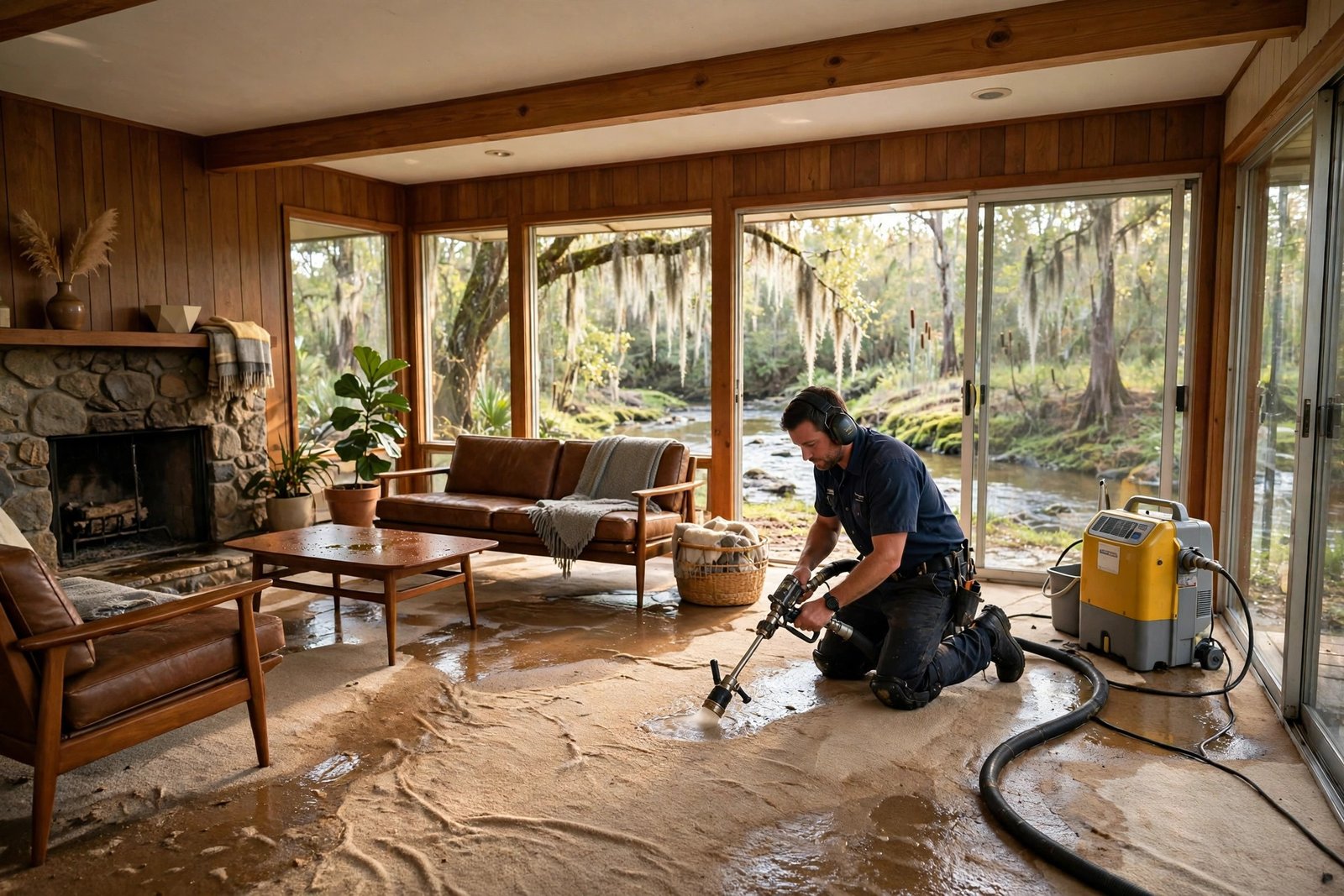
Common Water Damage Problems in Rosewood
Slab leaks from corroded copper or galvanized lines under concrete foundations, water heater failures in original utility areas, washing machine hose bursts, roof leaks on aging shingles, and storm water pooling against slabs during heavy rain. Slab leaks are especially sneaky – warm spots on the floor, the sound of running water when nothing’s on, or a climbing water bill.
Water Damage Services in Rosewood
Emergency water extraction, flood damage cleanup, sewage backup cleanup, storm damage restoration, burst pipe and slab leak damage repair, ceiling and wall repair, and structural drying. For slab leaks, a local provider coordinates with leak detection and plumbing specialists, then handles the full water damage restoration – drying, demolition of unsalvageable materials, and rebuild.
Why Rosewood Homeowners Call Us
Local providers know mid-century construction: how water travels under slabs, through wall cavities, and into the attic spaces of ranch homes. A provider’s moisture mapping finds the full extent before anything is cut, and drying is verified with daily readings – not guesswork. Straightforward documentation for your insurance, honest timelines, and no upsells.
Whatever the cause – from burst pipe and slab leak damage repair and structural drying to full flood recovery – you are covered by Columbia water damage restoration experts. One call connects you with a local provider, and the provider documents every job for your insurance.
Why Are Slab Leaks So Hard to Pinpoint?
The line sits under concrete, and water travels along the pipe before surfacing, so the spot is rarely above the break. Guessing means cutting the wrong concrete. Specialists locate it with acoustic testing first, then a provider handles drying and repair.
Rosewood's Mid-Century Homes and Water Risk
Rosewood’s ranch homes, mostly built from the 1950s through the 1970s, sit on concrete slabs with the plumbing of that era: galvanized lines corroding from the inside and original sewer laterals. Slab leaks are the signature Rosewood problem – corroded lines under concrete that hide until damage is extensive, announced only by warm spots on the floor or a climbing water bill. Aging water heaters in original utility areas fail catastrophically, washing machine hoses burst, and storm water pools against slabs during heavy rain. Because slab construction hides leaks, moisture mapping matters more here than almost anywhere – you can’t fix what you can’t find.
The most common causes are slab leaks from corroded supply lines, water heater failures past their 8-to-12-year lifespan, washing machine and dishwasher hose bursts, and roof leaks on aging shingles. Storm water pooling against slabs during heavy rain adds foundation-adjacent risk.
Rosewood, Gills Creek, and the 2015 Flood
Gills Creek runs along Rosewood Drive, and October 2015 showed what it can do. During the 1,000-year rain, the creek reached 17 feet, nearly double its record, and flooded the Rosewood Drive and Devine Street corridor. Rosewood Commons took several feet of water, and nearby homes flooded. Five dams breached in the watershed. The risk is not only the creek. Rain overwhelms drainage, water pools against slabs, and South Rosewood crawl spaces take water unnoticed for days. After storms, check the foundation and crawl space.
How Does a Provider Find Hidden Moisture?
Providers map moisture. They probe walls and floors with meters, then mark the boundary on a floor plan, with readings at each visit. In Rosewood’s slab homes, the map shows what needs drying and what can stay, and documents the loss for your claim.
What Does a Burst Washing Machine Hose Do?
A split hose can pour water for hours unnoticed, and spreads through a home into hallways, bedrooms, and wall cavities. Hoses age and blister over time. Shut the valves off, then call (803) 555-0147 to connect with a provider who extracts and dries the space.
Sources
Sources
- IICRC - The restoration industry's standards body (S500 water damage standard).
- U.S. EPA Mold - Mold growth timelines and cleanup guidance.
- Ready.gov Floods - Flood preparedness and insurance guidance.
Frequently Asked Questions
What are the signs of a slab leak?
Warm spots on the floor, the sound of running water with everything off, unexplained high water bills, cracks in flooring, or mildew smells can all point to a slab leak in Rosewood. If you suspect one, call a leak detection specialist first to find the source. Then call (803) 555-0147 to connect with a local provider for the water damage and drying.
My water heater is 15 years old. Should I worry?
Yes. Most tank water heaters last 8 to 12 years, so a 15-year-old heater in a Rosewood utility closet is a flood waiting to happen. Consider a replacement proactively, before it fails and floods your home. Know where your shutoff is in the meantime, so you can stop the water fast if it starts leaking.
Do you handle the insurance paperwork?
A local provider supplies moisture reports, drying logs, and photo documentation for your Rosewood claim, and can coordinate with your adjuster through the claim. The provider keeps a clear record of every step, so your insurer can see exactly what was damaged and what was done. That paperwork helps your claim move along without delays or missing details. Call (803) 555-0147.
Can a flooded crawl space be dried out?
Yes, in most cases. A provider pumps out the water, removes insulation and debris, and dries it until moisture readings return to normal. Some Rosewood homes have crawl spaces rather than slabs, and prompt drying protects floors and discourages mold. Call (803) 555-0147 to connect with a local provider.
What happens if water damage is left untreated?
Water keeps moving. In a Rosewood ranch home, a slab leak or wet wall cavity can rot framing, ruin flooring, and feed mold within days, while odors spread. Small repairs become rebuilds. A provider finds the full extent with moisture mapping and dries it before damage compounds. Call (803) 555-0147.
How do I know if water has gotten inside my walls?
Look for bubbling paint, soft drywall, musty odors, and baseboards pulling away. Moisture often travels from a hidden leak before any stain appears, and stains often show up rooms away from the actual leak. A provider checks walls with meters and thermal imaging, no tearing open first. Call (803) 555-0147 to get connected.
Water damage in Rosewood? Catch it early, fix it right.
Water damage in Rosewood? Catch it early, fix it right. Call (803) 555-0147 now – serving Rosewood and Columbia, SC.